
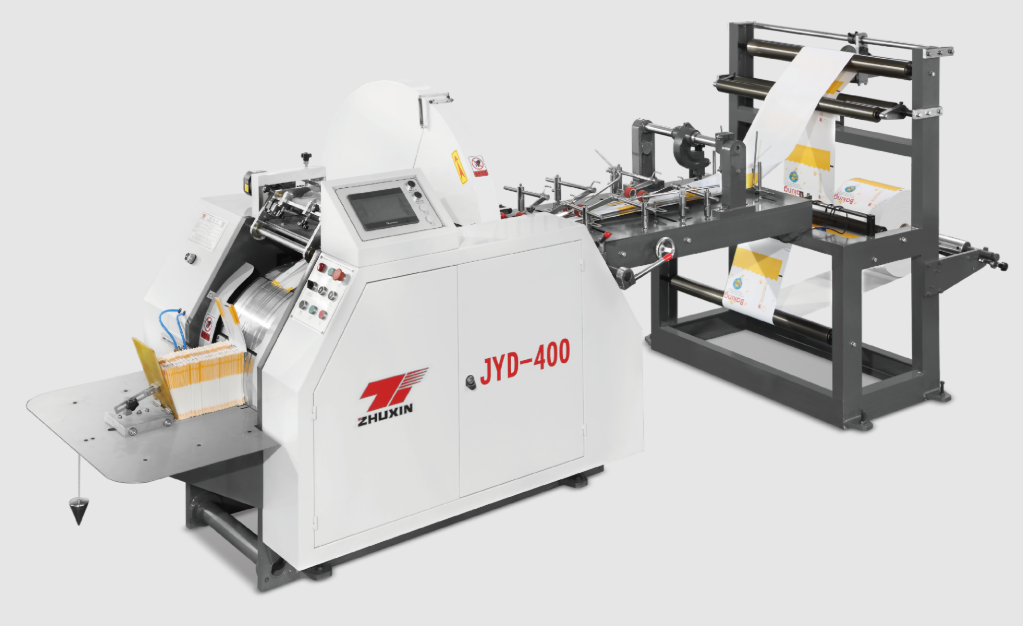
Machine brochures quote impressive numbers: 200 bags per minute, 600 bags per minute, 160 meters per minute. Then reality sets in. Your line runs at 60% of the rated speed, stops are frequent, and the production manager is explaining why this month's output fell short again. The gap between the rated speed printed in the brochure and the actual output of your production line is one of the most misunderstood — and most fixable — problems in paper bag manufacturing. This article explains what determines your real output, how to find the bottlenecks that steal it, and the practical steps that close the gap between theoretical speed and actual production.
1. Understanding the Gap: Rated Speed vs. Actual Speed
Rated speed is the maximum speed the machine can reach under ideal conditions: perfect paper, perfect glue, a fully warmed-up machine, and a skilled operator. Actual speed — what you really produce — is always lower, and the reasons are usually not the machine's fault:
-
Setup and changeover time. Every roll change, size change, and glue reload stops production. Ten minutes per roll change on a line that changes rolls every hour costs roughly 15% of available time.
-
Quality speed limits. Some papers run poorly at full speed — they stretch, tear, or crease. Operators back the speed down to protect quality, and that becomes the effective ceiling.
-
Downtime for cleaning and adjustments. Glue nozzles clog, sensors drift, folds misalign. Each stop is short, but they add up.
-
Operator skill. An experienced operator holds speed and quality together; a trainee backs off or produces rejects.
-
Maintenance condition. A well-maintained machine holds its speed; a neglected one loses capacity gradually.
The industry norm is that well-run lines achieve 70–85% of rated speed in sustained production. If you are below 70%, your bottleneck is probably not the machine — it is one of the factors above.
2. Finding the Bottleneck
Output is governed by the weakest link in the chain. In a paper bag line, the chain includes: paper roll handling, unwinding and splicing, printing (if inline), forming and gluing, bottom folding, cutting, and stacking/delivery. To find your bottleneck, measure rather than guess:
-
Track stops per shift. Record every stop: how long, and why (roll change, jam, glue issue, adjustment, maintenance). After two weeks, the pattern is obvious.
-
Measure the ratio of machine running time to shift time. Divide actual machine-running minutes by total shift minutes. A line at 80% running time is healthy; below 65%, the line is spending more than a third of its time stopped.
-
Watch the delivery end. If bags are waiting for the operator, the machine can run faster than the human can handle — a real bottleneck at high speeds.
-
Compare similar jobs. If the same job runs at different effective speeds on different shifts, the difference is operational, not mechanical.
Once the bottleneck is identified — not guessed — you can target it with precision.
3. Operational Fixes That Cost Nothing
Most output gains come from operations, not new hardware:
-
Pre-stage materials. Prepare the next paper roll and glue cartridges before the current one runs out. A two-minute planned change instead of a ten-minute scramble saves hours per month.
-
Standardize changeovers. Write a checklist for size changes and train every operator on it. Factories that standardize changeovers routinely cut setup time by 30–50%.
-
Schedule maintenance windows. Rather than letting small problems cause random stops all day, batch them into planned daily cleaning/maintenance windows. Random stops are three times as costly as planned ones.
-
Match speed to job. Run easy jobs (standard paper, simple format) at high speed and slow down only for demanding jobs. One operator-managed speed profile per job type is the practical approach.
-
Track and communicate. Post daily output and stop reasons where operators can see them. What gets measured gets managed — teams improve fast when they see their own numbers.
4. Hardware Upgrades That Raise Real Output
If operations are sound but output is still capped, the machine itself may be the limit — and the fix may be an upgrade rather than a new machine:
-
Servo drives vs mechanical drives. Servo-driven machines hold tension and registration more precisely at speed and reduce waste, which raises effective output. The Zhuxin ZXFD-290 and ZXJD-450 use servo-driven systems for this reason.
-
Automatic splicing. An automatic paper splicer joins a new roll without stopping, eliminating roll-change downtime entirely — worth more than most single upgrades.
-
Faster glue systems. Hot-melt systems with higher application speed can raise the machine's effective speed ceiling.
-
Delivery and stacking improvements. Automatic counting, stacking, and conveying reduce operator involvement at the delivery end, which becomes the bottleneck on high-speed lines.
Run the numbers before upgrading: if a $5,000 upgrade saves 30 minutes per shift, it pays for itself in months; if your bottleneck is actually operational, hardware money is wasted.
5. A Practical Improvement Plan
Set a baseline, then improve in measurable steps:
-
Record current effective speed (bags per hour, not per minute) and waste rate for a full month.
-
Pick the two biggest stop reasons and fix them — one at a time.
-
Re-measure monthly. A 5% output gain on a line producing 3 million bags a year is 150,000 extra bags — a substantial revenue increase at zero capital cost.
-
Keep a per-machine logbook so improvements are documented and sustainable, even when staff changes.
Conclusion
The rated speed on a paper bag machine brochure is a promise of capability, not a guarantee of output. What actually determines your production is a combination of operations discipline, maintenance condition, and — only at the end — hardware capability. Measure your stops, standardize your changeovers, maintain the machine, and upgrade targeted weak points, and you can typically lift real output by 20–40% without buying a new machine.
When the time comes to add capacity, choose machines engineered to sustain speed: servo-driven, precisely built, and backed by real support. Zhejiang Zhuxin Machinery's square bottom (ZXFD-290, 200 pcs/min) and sharp bottom (ZXJD-450, 50–600 pcs/min) paper bag machines are built for sustained production and supported by lifetime after-sales service and technical assistance. Contact Zhuxin to discuss how to optimize your current line — or to spec a new one — for maximum real-world output.