
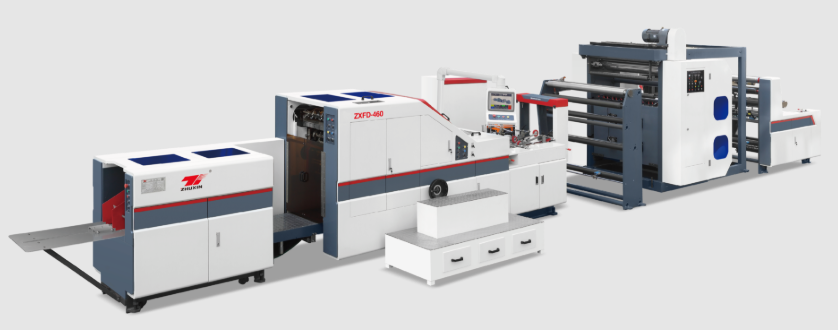
Africa is undergoing one of the most rapid packaging transitions in the world. From the streets of Nairobi to the souks of Marrakech, plastic carrier bags — once ubiquitous — are disappearing from checkout counters, replaced by printed kraft paper bags. The shift is being driven by some of the strictest plastic bans on the planet, a fast-growing consumer class, and expanding retail and food-service sectors. For paper bag manufacturers, African markets represent one of the most attractive growth opportunities anywhere — and for local producers, the timing has never been better. This article examines the size of the opportunity, the forces driving demand, and the practical challenges that new entrants must navigate.
1. The Size of the Opportunity
The African paper bag market is expanding rapidly, propelled by three structural forces:
-
Population and urbanization. Africa has the world's youngest population and among the fastest urbanization rates. As millions move to cities each year, modern retail, bakeries, fast-food chains, and supermarkets multiply — and all of them need packaging.
-
Retail and food-service expansion. International and pan-African retail chains are growing aggressively, standardizing on paper carrier bags for environmental and branding reasons. Quick-service restaurant chains are also expanding, creating steady demand for paper takeaway bags.
-
Local manufacturing policy. Governments across the continent increasingly favor local production over imports, with tariffs and incentives designed to build domestic manufacturing capacity. Paper bag production is a natural entry point for new factories.
The result: demand for paper bags is growing faster than local supply in most countries, which means both attractive margins and a wide-open market for new producers.
2. Regulatory Forces: The World's Strictest Plastic Bans
Africa has become the global leader in plastic regulation. Some of the world's strictest and earliest single-use plastic bans were enacted here:
-
Kenya: One of the first countries to impose a complete ban on plastic carrier bags, with heavy penalties for production, import, and use. The result was an immediate surge in demand for paper alternatives.
-
Rwanda: A total ban on non-biodegradable plastic bags, consistently enforced since 2008, making paper bags the norm in retail.
-
Tanzania, Uganda, and the East African region: Following Kenya's lead with bans and levies on thin plastic bags.
-
West and Southern Africa: Multiple countries have introduced bans or taxes on plastic carrier bags, and the trend continues to spread.
Every ban converts a plastic bag market into paper demand virtually overnight. Countries with limited local paper bag capacity become import markets first — and then, as logistics costs and import duties make imports expensive, local manufacturing becomes the clear economic choice.
3. The Business Case for Local Production
For entrepreneurs and investors, the numbers tell a compelling story:
-
Untapped local supply. In most African countries, paper bags are still imported in significant volumes. A local factory can undercut imports on price while offering faster delivery and local-language branding.
-
Strong unit economics. Labor costs are competitive, and modern machines require few operators — a line producing 100–200 bags per minute can be run by a small team. Even modest production volumes serve a regional market profitably.
-
Financing momentum. Development finance institutions and impact investors actively fund sustainable packaging projects in Africa, recognizing both environmental impact and commercial viability.
-
Export potential within Africa. The African Continental Free Trade Area (AfCFTA) is gradually reducing intra-African tariffs, allowing factories to serve a continental market, not just one country.
The typical successful entry profile: a small-to-medium factory producing square bottom and sharp bottom bags for local bakeries, retailers, and takeaway chains, with an inline flexo unit for branded printing — the segment with the best margins.
4. Practical Challenges to Plan For
The opportunity is real, but so are the challenges. Plan for them from day one:
-
Raw material supply. Quality kraft paper is often imported, which means currency risk, longer lead times, and fluctuating costs. Solutions include consolidating purchases with other local producers, building paper inventory strategically, and, where available, sourcing regional virgin fiber producers.
-
Power and infrastructure. Unreliable electricity is a reality in parts of the continent. Budget for voltage stabilizers and consider generator backup for critical production hours; a paper bag line's economics depend on predictable running hours.
-
Skilled labor. Operators trained on modern servo-driven machines are scarce. Choose a machine supplier that provides thorough on-site training and remote technical support — the machine is only as good as the team running it.
-
Maintenance and spare parts. Importing spare parts can be slow and expensive. Order a comprehensive spare parts kit with the machine and establish a local parts buffer. Suppliers with responsive global support networks, such as Zhuxin's lifetime after-sales service, reduce this risk significantly.
-
Currency and payment risk. For imported machinery, consider financing structures and staged payments that protect both buyer and seller.
5. How to Enter the Market
If you are considering paper bag manufacturing in Africa, follow this sequence:
-
Pick your country by demand and stability first — look at plastic ban enforcement, retail growth, and import volumes of paper bags.
-
Validate demand with real customers — sign letters of intent with bakeries, supermarkets, and takeaway chains before ordering machinery.
-
Choose flexible equipment — machines with wide size ranges and inline printing let you adapt quickly as the market develops.
-
Build the support network before the machine arrives — arrange power conditioning, paper suppliers, spare parts, and a maintenance technician.
-
Start with a niche — food-grade bags for bakeries, or printed shopping bags for retailers, establishes your reputation before you expand.
Conclusion
Africa's paper bag market is at a rare inflection point: regulation is converting plastic demand into paper demand, retail and food-service sectors are growing quickly, and local manufacturing capacity remains far below demand. For investors and entrepreneurs, that combination — a growing market, an enforced regulatory shift, and a supply gap — is the classic setup for a profitable manufacturing venture. The challenges of infrastructure and supply chains are real but solvable, especially with the right equipment partner.
Zhejiang Zhuxin Machinery has supplied paper bag production lines to customers across Africa and stands ready to support new entrants with ISO 9001 certified machines — square bottom, sharp bottom, and middle sealing models plus YT-S flexo printers — lifetime after-sales service, spare parts supply, and full technical support including on-site training. Contact Zhuxin today to discuss your African paper bag manufacturing project.