
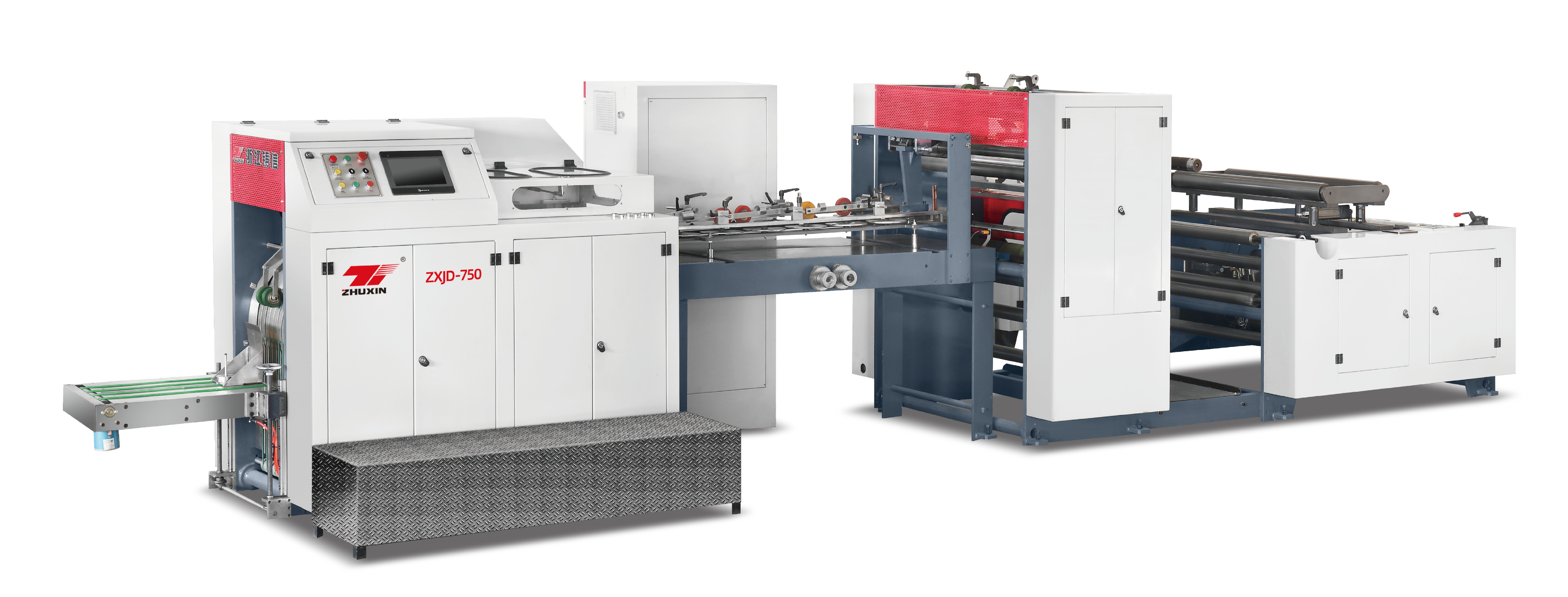
From Manual to Automated: The Evolution of the Paper Bag Making Machine
Transition from Handcrafted to Fully Automated Production Lines
Paper bag machines have come a long way since their humble beginnings as simple hand tools. Back in the early 1900s, workers had to cut, fold, and glue each bag by hand, managing maybe around 50 to 60 bags an hour with lots of inconsistencies in those seams. Things started changing in the 90s when semi automatic machines came along with those pneumatic controls, pushing output up to about 200 bags per hour though operators still needed to watch them closely all day. These days we see fully automated production lines equipped with servo motors, PLC systems, and even robots guided by cameras that take care of everything from feeding material to attaching handles without any human hands involved. A recent market report from HTF Intelligence suggests that going fully automated cuts down production mistakes by nearly 80 percent and basically doubles what factories can produce compared to older manual methods.
Role of Automation in Enhancing Efficiency and Sustainability
The latest automated paper bag production lines boost efficiency while being better for the environment thanks to how they manage resources. When it comes to glue application, these machines hit within 0.1 mm accuracy, and they cut down on paper scraps to below 2%. This means around 30% less wasted material overall and about 25% savings in energy costs when compared with older semi-automated setups. What's interesting is that all these benefits fit right into what organizations like the Ellen MacArthur Foundation call for in their circular economy framework. The machines also come equipped with smart IoT sensors that keep an eye on things like glue thickness and cutting blade wear. According to Packaging Digest from last year, this monitoring actually stops roughly 9 out of 10 possible breakdown situations before they happen. With consumers increasingly looking for greener packaging options, manufacturers who invest in these technologies are well positioned for growth. Industry forecasts suggest the market will expand at around 6.8% annually over the next decade, so getting ahead of this trend makes good business sense.
Precision Gluing Systems in the Paper Bag Making Machine
Hot-Melt vs. Cold Glue: Performance in High-Speed Production
Modern paper bag manufacturing relies on two main types of adhesives these days hot melt and cold glue systems. The hot melt stuff works pretty fast, setting within about a second after cooling down according to the 2023 report on adhesives tech. That speed makes it great for those super fast production lines cranking out over 1,200 bags per hour, especially when working with papers that have synthetic coatings. On the flip side, cold water based glues are better for the environment and meet FDA standards, but they take around 8 to 12 seconds to dry completely. This means they're mostly used for slower operations making plain old kraft bags. Looking at numbers from the Flexible Packaging Association in 2022 shows something interesting hot melt systems actually use 18 percent less energy compared to cold glue options. However manufacturers need to balance this against the fact that materials for hot melt cost about 22 percent more per unit.
| Parameter | Hot-Melt Glue | Cold Glue |
|---|---|---|
| Drying Time | 0.8–1.5 seconds | 8–12 seconds |
| Bond Strength | 4.2 N/mm² | 3.8 N/mm² |
| Energy Use | 5.6 kWh/1k bags | 6.8 kWh/1k bags |
| Ideal Application | Laminated/Coated Papers | Uncoated Kraft Papers |
Servo-Controlled Gluing for Uniform Seam Application
Servo driven gluing systems keep seam quality pretty consistent because they can hold around 0.2 mm positioning accuracy even when running at speeds as high as 150 meters per minute. According to the 2023 Machinery Efficiency Index, these machines cut down on glue bleed problems by about 73%. They also come equipped with sophisticated nozzle setups that change how much adhesive flows out between 0.05 and 0.3 milliliters for every linear centimeter, depending on what the system senses about paper thickness in real time. What makes this whole setup work so well is that it bonds materials uniformly across different weights ranging from light 60gsm papers all the way up to heavier 120gsm stock without needing anyone to manually adjust settings.
How Glue Consistency Impacts Bag Strength and Appearance
Keeping adhesive viscosity within about 5% is really important for making sure products hold together well and look good too. If the formulation drops below 12,000 cP, there's a real problem with seams coming apart when subjected to around 9kg weights. On the flip side, anything over 18,000 cP creates those ugly ridges that make printed surfaces feel rougher by roughly 40%. Smart companies have started using inline viscometers these days. These devices tweak solvent ratios automatically so they can keep the ideal viscosity range somewhere between 14,000 and 16,000 cP even when temperatures swing from 18 to 32 degrees Celsius. The results speak for themselves actually. According to recent surveys from Global Packaging Quality, since implementing this technology back in 2020, we've seen customer complaints about packaging issues drop by nearly a third.
Advanced Cutting Technology for Precision and Material Efficiency
Modern paper bag making machines achieve exceptional accuracy through advanced cutting systems, reducing material waste by up to 18% compared to traditional methods. A 2023 manufacturing analysis revealed that precision cutting enables annual savings of over 15 tons of paperboard per production line, significantly improving operational sustainability.
Rotary Cutters and Servo-Driven Blade Systems
Blade systems powered by servos can make cuts accurate within about 0.01 mm, which gets rid of those annoying misaligned edges that used to waste between 7 and 12 percent of materials. These systems aren't like old school hydraulic cutters at all. They actually change the blade speed on their own so they keep performing well even when producing anywhere from 800 to as many as 1,200 bags every single minute. Looking at some recent data from an efficiency study done in 2023, it turns out that switching to servo driven tech cuts down energy usage by around 22 percent. Plus, tools last twice as long as they do with traditional equipment setups.
AI-Integrated Vision Systems for Real-Time Blade Calibration
The AI equipped cameras can process over 1,200 bags every minute and spot tiny inconsistencies in how things are cut down to the micron level. When these smart systems compare what they see in real time with the computer designs, they adjust those cutting blades in just half a second. That's about ten times quicker than when workers have to do it themselves. Factories report around 40% less downtime because of this speed boost, plus the dimensions come out accurate about 99.98% of the time. For companies running fully automated packaging operations where everything has to fit together perfectly, getting those measurements right makes all the difference between smooth production runs and costly mistakes on the assembly line.
Key Improvements Over Legacy Systems
| Metric | Traditional Systems | Modern Systems | Improvement |
|---|---|---|---|
| Cutting Accuracy | ±0.5 mm | ±0.01 mm | 50% |
| Material Waste Rate | 8.7% | 1.9% | 78% |
| Calibration Speed | 5 sec | 0.5 sec | 90% |
| Energy Use per 1k Bags | 18 kWh | 14 kWh | 22% |
Data sourced from 2023 Packaging Machinery Efficiency Benchmarks
This integration of mechanical precision and machine learning ensures maximum material yield while meeting strict production tolerances.
Integrated Gluing and Cutting Workflow in Modern Paper Bag Making Machines
Synchronization of Gluing and Cutting for Seamless Production
The latest generation of paper bag manufacturing equipment cuts production time down by around 15 to maybe even 20 percent thanks to advanced features like servo controlled gluing systems and AI assisted cutting mechanisms. When these machines operate, they constantly exchange information between different components so the glue gets applied just right while the cutting blades are positioned accurately. According to recent industry reports from 2023, this real time coordination brings down alignment problems by about 92 percent compared to older models that worked independently. Take what happens when the glue starts getting thicker or thinner during operation for example. The machine's smart cutting system senses this change and makes micro adjustments to the blade depth within fractions of a millimeter. This keeps the seams strong and reliable even when the machine is cranking out over 200 bags every single minute.
Case Study: Output Efficiency Gains at Zhejiang Zhuxin Machinery Co., Ltd.
After upgrading to synchronized gluing and cutting systems, Zhejiang Zhuxin Machinery Co., Ltd. achieved:
- 92% production consistency across 8-hour shifts
- 40% reduction in material waste via AI-optimized cutting paths
- 25% energy savings by eliminating redundant motor operations
Post-implementation data showed a 19% increase in daily output—from 12,000 to 14,280 bags—without additional labor. These gains were driven by removing bottlenecks between adhesive curing and trimming phases, a persistent issue in traditional workflows.
Future Trends: Smart Factories and IoT in Paper Bag Making Machines
IoT-Enabled Monitoring for Real-Time Process Control
The latest paper bag manufacturing equipment comes equipped with IoT sensors that track around fifty different production parameters every single second. These include things like how thick the glue is getting, whether cutting blades are still sharp enough, and what kind of tension exists across the material web during processing. With this constant stream of information, operators can make on the spot changes which cuts down on wasted materials by roughly 18 percent when compared to older methods according to industry reports from last year. The wireless network of sensors sends all these readings to central control panels where workers get alerts about problems usually within just two or three cycles of operation. This gives them time to fix issues quickly before too many defective products start showing up in batches.
Predictive Maintenance in Automated Bag Manufacturing Lines
Predictive maintenance driven by artificial intelligence looks at how machines vibrate and measures motor current levels to spot potential problems well before they happen, sometimes as early as three days ahead. Pair this technology with internet connected diagnostics and those smart algorithms can slash unexpected downtime by around forty percent. That makes all the difference on production lines running nonstop at speeds exceeding 500 bags every single minute. What's really cool about these systems is their ability to automatically place orders for spare parts and book maintenance sessions right when there are scheduled pauses in operations. As a result, factories manage to keep their equipment running smoothly most of the time, maintaining better than 95% uptime year after year. Plus, companies report saving roughly thirty percent on yearly maintenance expenses according to recent industry research from last year's Smart Manufacturing Study.
FAQ
What advancements have been made in paper bag making machines?
Paper bag making machines have evolved from manual to fully automated systems, significantly increasing efficiency, reducing errors, and enhancing sustainability.
How does automation impact paper bag production?
Automation boosts production efficiency, reduces material waste, and lowers energy consumption, aligning with sustainable practices and improving accuracy in production.
What are the benefits of using hot-melt and cold glue systems in production?
Hot-melt glue systems offer faster drying times ideal for high-speed production, while cold glue is more environmentally friendly and suited for kraft bags.
How does the integration of AI and IoT benefit paper bag manufacturing?
AI and IoT integration enables predictive maintenance, real-time monitoring, and better process control, reducing downtime and material waste, thus ensuring seamless operations.
Table of Contents
- From Manual to Automated: The Evolution of the Paper Bag Making Machine
- Precision Gluing Systems in the Paper Bag Making Machine
- Advanced Cutting Technology for Precision and Material Efficiency
- Integrated Gluing and Cutting Workflow in Modern Paper Bag Making Machines
- Synchronization of Gluing and Cutting for Seamless Production
- Case Study: Output Efficiency Gains at Zhejiang Zhuxin Machinery Co., Ltd.
- Future Trends: Smart Factories and IoT in Paper Bag Making Machines
- FAQ