
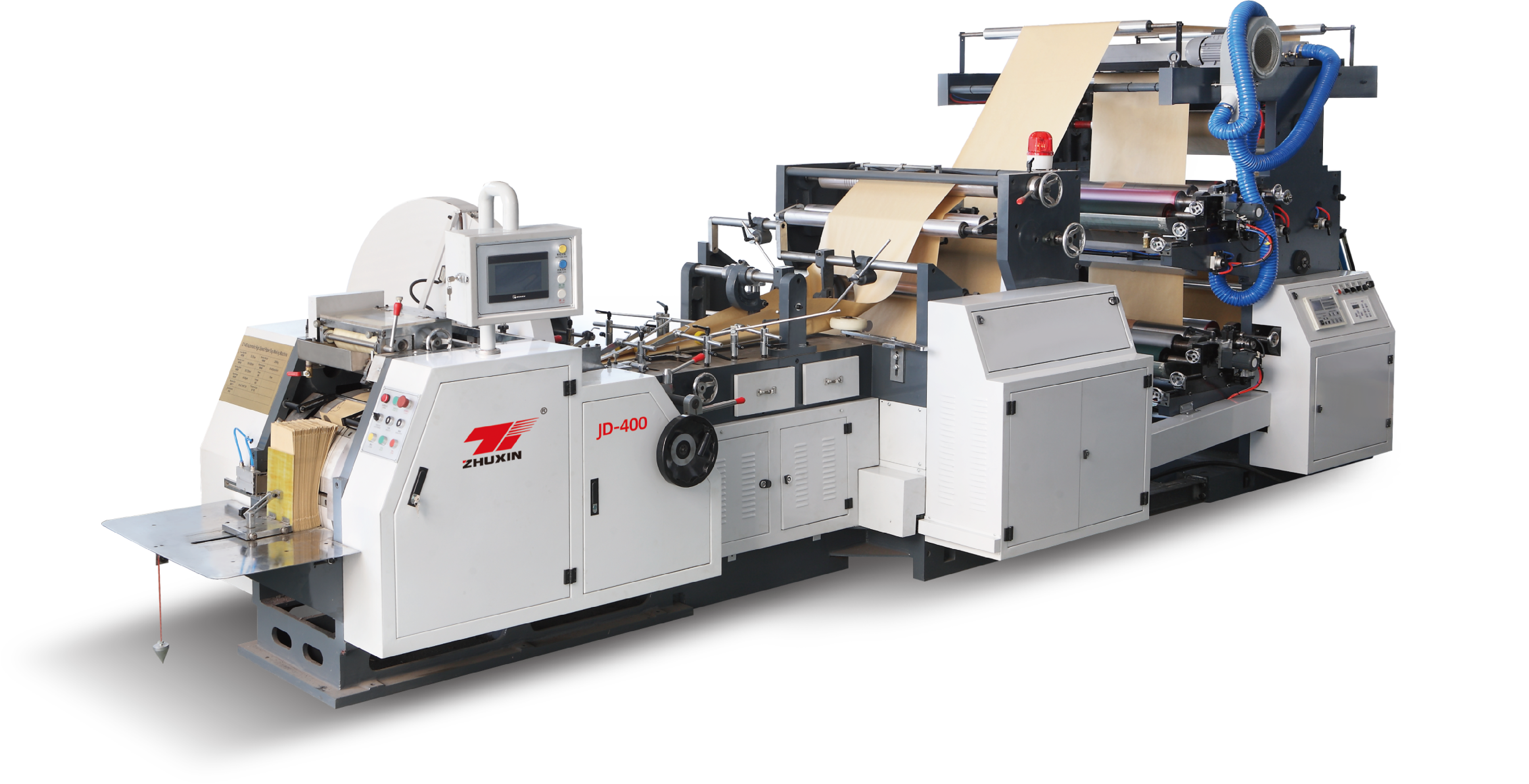
Meeting the Demand for High-Volume Paper Bag Production
The Rise of Sustainable Packaging and Its Impact on Paper Bag Demand
Since 2020, we've seen the global paper bag market expand by around 18%, largely because so many countries have banned plastics these days – there are now restrictions in place across 127 nations according to Packaging Insights 2024. People are also just getting more interested in environmentally friendly options for their shopping needs. The food retail sector accounts for roughly 43% of all this market growth, as stores prefer using paper bags since they can be composted after use, especially when customers grab groceries or order takeout meals. Government regulations have definitely pushed things along too. Take the European Union's Single-Use Plastics Directive for instance, which has really sped up the switch away from plastic. Nowadays, most companies want at least 40% of their paper bags made from post-consumer recycled materials during procurement processes.
Key Market Drivers for Fast, Reliable Paper Bag Making Machines
Industrial buyers seek three core capabilities in paper bag making machines:
- Speed: Systems producing 400+ bags/minute are now standard for large bakeries and pharmaceutical suppliers
- Material flexibility: Compatibility with 60–200gsm papers, including moisture-resistant and recycled grades
- Energy efficiency: Next-gen models reduce power consumption by 32% using regenerative braking systems
These features enable manufacturers to fulfill big-box retailer orders exceeding 5 million units monthly without sacrificing quality.
How Automation Enables Scalable Output in Modern Manufacturing
Modern production lines now use machine vision systems to spot defects as they happen, bringing down error rates to just 0.1%. At the same time, AI based predictive maintenance cuts downtime by around 41%, according to Production Tech Report from 2023. When it comes to robotic palletizing, these machines actually work alongside bag making equipment, creating speeds that simply aren't possible when people do the job manually. The result? Factories can boost their output three times over during busy seasons without compromising on cleanliness requirements set by the FDA. Many manufacturers have found this combination of technologies makes a huge difference in both productivity and compliance.
Core Technologies in Automatic Paper Bag Making Machines
Roll-Fed Technology: Ensuring Efficiency and Material Consistency
Roll-fed systems with automatic tension control optimize material use and ensure consistent alignment throughout production. Integrated sensors adjust tension in real time, minimizing wrinkles or misfeeds even at speeds over 200 bags/minute. Compared to sheet-fed alternatives, these systems reduce material waste by up to 18% (Packaging Digest 2023).
Integrated Workflow: Cutting, Folding, Gluing, and Sealing in One Line
Top-tier machines combine four critical processes into a single automated line:
- Precision laser cutting for uniform dimensions
- Pneumatic folding arms achieving ±0.3mm crease accuracy
- Hot-melt adhesive systems applying 1.2–1.8g per seam
- Heat sealing at 150–180°C for water-resistant bonds
This integration cuts human intervention by 60% and sustains 99.5% operational uptime (Ponemon 2023), ensuring consistent, high-volume output.
Handle Attachment Systems: Balancing Speed and Durability
High-speed handle attachment systems apply 3–5 handles per second while ensuring strength. Ultrasonic welding creates bonds capable of withstanding 15–25kg of force (ASTM D4169 testing). Rotary die-cutters pre-punch slots, and servo-driven feeders guarantee precise placement—essential for retail-grade durability and appearance.
Understanding the Fully Automated Production Workflow
PLC (Programmable Logic Controller)-driven coordination synchronizes 12+ subsystems across the production line. IoT-enabled models analyze performance data to predict maintenance needs, reducing unplanned downtime by 34% (McKinsey 2023). From roll loading to final palletizing, these systems produce 18,000–22,000 bags/hour while meeting ISO 9001 quality standards.
Measuring Performance: Speed and Efficiency in Paper Bag Making Machines
Benchmarking Production Speed Across Machine Types
These days, packaging machines can handle anywhere between 50 and even 300 plastic bags every minute, and this all depends how much automation they have built in. The basic models typically manage around 50 to 80 bags each minute, whereas those fancy fully automatic ones with servos running them often push past 200 bags per minute mark. When it comes to keeping things steady for regular bag shapes, high speed production lines really shine. But when manufacturers want something special like gusseted bags or laminated versions, the pace drops down to somewhere between 120 and 160 bags per minute instead. Looking at industry data from last year's Packaging Automation Report shows an interesting pattern too complex designs slow things down by roughly a quarter to almost half the speed. And if there are handles added into the mix, that adds about 15 to 20 extra seconds for every hundred bags produced.
Comparative Analysis of Machine Efficiency and Output Capacity
Automated machines lower production costs by 15–25% compared to semi-automatic systems, primarily through reduced labor and material waste. Key metrics include:
- OEE (Overall Equipment Effectiveness): Top units achieve 85–92% via predictive maintenance
- Downtime: IoT monitoring cuts unplanned stoppages by 30–50%
- Energy Efficiency: Variable frequency drives (VFDs) reduce energy use by 18–22% per 1,000 bags
A 2024 industry study found automated lines produce 2.8–3.2 tons of paper bags per 8-hour shift, compared to 0.9–1.2 tons with manual methods.
Case Study: High-Speed Production Lines at Zhejiang Zhuxin Machinery Co., Ltd.
Zhejiang Zhuxin's integrated system exemplifies scalable efficiency:
- Processes 12–18 gsm kraft paper at 280 bags/minute with ±0.3mm dimensional accuracy
- Reduced changeover times by 67% using quick-release die-cutting modules
- Achieved 98.4% defect-free output in 2023 trials for food-grade bags
A $2.4M facility upgrade increased throughput by 40% while maintaining ISO 50001 energy management certification.
Cost-Effectiveness of Industrial Paper Bag Making Machines
Evaluating ROI in Large-Scale Paper Bag Production
Automated systems deliver strong financial returns, reducing labor costs by 60% and increasing hourly output fourfold—producing over 2,000 bags per hour versus 500 with traditional methods. Material waste drops from 15–20% to just 3–5%, enhancing sustainability and cost control.
| Cost Factor | Traditional Methods | Automated Machines |
|---|---|---|
| Labor Requirements | 8–10 operators | 2–3 operators |
| Energy Consumption | Standard | 30% lower |
| Defect Rate | 10% | 0.5% |
Most operations achieve ROI within 18–24 months, supported by 300–400% productivity gains and 25–35% annual energy savings. Predictive maintenance further reduces long-term costs by minimizing unexpected downtime.
Labor Savings Through Automation in Bag Manufacturing
Automation removes repetitive tasks such as manual folding and glue application, allowing one operator to oversee multiple machines. This cuts workforce needs by 70–80% in high-volume settings while improving safety. PLCs and advanced sensors ensure consistent output, reducing technician training time by 40% compared to semi-automated setups.
Innovations in Folding, Gluing, and Sealing for Superior Bag Quality
Precision Cutting and Folding Mechanisms in Modern Machines
Laser-guided cutting achieves ±0.2 mm tolerances, reducing material waste by 15% compared to conventional methods (Packaging Efficiency Report 2023). Servo-driven folding arms produce crisp, consistent creases essential for automated filling lines. Modular tooling enables rapid changeovers between flat-bottom, satchel, and gusseted styles—adapting to custom orders in under 10 minutes.
Advanced Gluing and Sealing for Durable, Leak-Proof Bags
Pulsed adhesive applicators deposit glue layers of 0.05–0.2 mm with 98% accuracy, cutting adhesive use by 22% while maintaining bond strength above 4.5 N/cm² (ASTM D6862-21). For enhanced moisture resistance:
- Multi-stage ultrasonic sealing suits kraft liners and other sensitive materials
- Pressure-controlled heat tunnels activate adhesives without damaging fibers
- Infrared sensors detect sealing flaws at speeds up to 120 bags/minute
Hot Melt vs. Water-Based Adhesives: Performance in High-Speed Production
| Factor | Hot Melt Adhesives | Water-Based Adhesives |
|---|---|---|
| Curing Time | 0.8–1.2 seconds | 8–15 seconds |
| Line Speed Capacity | 300+ bags/minute | 180 bags/minute |
| VOC Emissions | 0.1 g/m³ | 2.4 g/m³ |
| Recyclability | Requires separation | Fully compatible |
Hot melt dominates high-speed environments due to instant bonding, while water-based adhesives support strict environmental certifications like FSC® and EU Ecolabel. Emerging hybrid systems allow on-the-fly adhesive switching—meeting diverse market demands without production delays.
FAQ
Why is the demand for paper bags increasing?
The demand for paper bags is rising due to global efforts to reduce plastic usage, increasing environmental awareness, and regulatory measures like the European Union's Single-Use Plastics Directive.
What are the advantages of automated paper bag making machines?
Automated machines provide speed, material flexibility, and energy efficiency, allowing manufacturers to produce large volumes efficiently while reducing labor costs and material waste.
How does automation enhance output in modern paper bag manufacturing?
Automation reduces error rates, cuts downtime, and allows high-speed production lines to operate more efficiently, often boosting output and maintaining product quality.
How do modern machines ensure paper bag quality?
Modern machines use advanced technologies like laser-guided cutting, ultrasonic welding, and real-time monitoring to ensure precision, durability, and defect-free production.
Table of Contents
- Meeting the Demand for High-Volume Paper Bag Production
- Core Technologies in Automatic Paper Bag Making Machines
- Measuring Performance: Speed and Efficiency in Paper Bag Making Machines
- Cost-Effectiveness of Industrial Paper Bag Making Machines
- Innovations in Folding, Gluing, and Sealing for Superior Bag Quality
- FAQ