
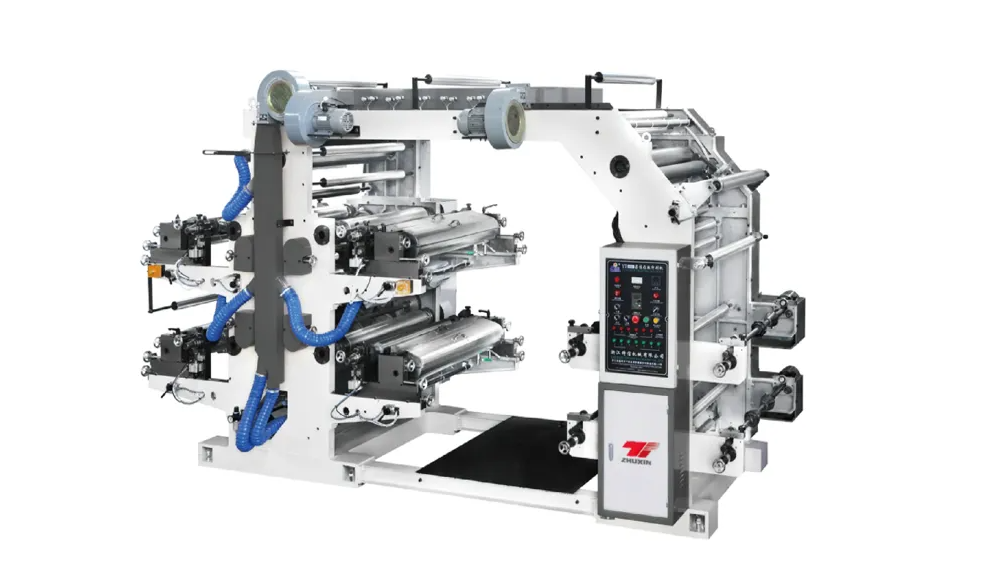
The Drive Train That Makes High Speed Possible
A flexo press that runs at three hundred meters per minute is impressive only if it holds register and delivers clean solids at that speed. The mechanical foundation that makes this possible starts with the main drive system. Servo motors directly coupled to each print station eliminate the cumulative gear backlash and drive shaft windup that plague older line shaft machines. When a press operator dials in a speed change, every cylinder accelerates and decelerates in perfect electronic synchronization. A corrugated preprint converter once measured their registration accuracy at full sprint and found that the servo driven press held within plus or minus zero point zero five millimeters across all six color stations, a tolerance that simply was not achievable on their previous mechanical gear train equipment. Direct drive technology also removes dozens of wear items like universal joints and gearbox oil seals, which means the speed you see on day one is the speed you still get after five years of heavy production. The Flexographic Technical Association has documented that servo driven presses consistently reduce setup waste by over forty percent compared to mechanical presses, and waste reduction at high speed is where the real money gets made.
Quick Changeover Systems That Slash Non Productive Time
Speed means nothing if the press sits idle between jobs for forty five minutes while the crew washes ink trays and manually cranks print cylinders into position. Real world productivity measures output per shift, not the number printed on the max speed placard. Fast flexo presses now integrate features like cantilevered anilox roll change systems that let one operator slide out a complete ink deck, swap the anilox sleeve and slide it back in under two minutes. Motorized print cylinder positioning with digital pre register stores the exact location for every repeat job, so when that order comes back next month the operator simply taps the job name on the touchscreen and all six stations jog to their correct position automatically. A label converter running mostly repeat orders found that with recipe based pre register and quick change anilox sleeves, their average job changeover dropped from thirty eight minutes to just twelve minutes. Over a month of running eight to ten jobs per day, that reclaimed nearly fourteen hours of productive print time. Industry studies consistently show that the quickest path to higher output is rarely a faster running speed, it is shrinking the gaps between jobs.
Reliability Engineering That Prevents Unscheduled Stops
Unscheduled downtime costs far more than the repair bill. A press that goes dark during a rush order triggers missed delivery penalties, overtime labor to catch up and sometimes lost customers. That is why high output flexo presses are built with reliability designed in from the component level up. Critical wear parts like doctor blade holders and anilox roll bearings are specified for continuous duty cycles at elevated speeds, not just occasional peak performance. Thermal management matters too. UV curing units generate intense heat, and if the lamp housing or cooling system is undersized, heat bleeds into the press frame and causes thermal expansion that throws off registration within twenty minutes of startup. A wide web flexible packaging printer in Southeast Asia described how upgrading to a press with water cooled UV cassettes and a dedicated chiller unit eliminated the slow registration drift they used to fight every Monday morning. The press now holds register from the first impression to the last, shift after shift. Standardized preventive maintenance schedules recommended by machine builders, combined with automatic lubrication systems that deliver the right grease dose at the right interval, keep bearings alive far longer than manual greasing ever could.
Intelligent Controls That Protect the Press From Operator Error
Even the most robust machine can be damaged in seconds by a wrong button press. Modern flexo presses now include layers of software based protection that make it difficult for an inexperienced operator to crash the print cylinders or over tension the web. Automatic impression release on emergency stop, web break detection sensors that stop the press within half a meter and tension control loops that keep the substrate within a safe window regardless of unwind roll diameter are no longer premium options. They are standard on any press marketed as reliable. A tissue converting plant manager shared that their previous machine had no automatic unwind tension taper, so operators had to manually adjust tension as the parent roll got smaller. One distracted operator left the tension too high and tore a ten kilometer roll of lightweight paper, taking the press offline for three hours to re web. The new press with closed loop tension control eliminated that failure mode entirely. Building controls that guide operators toward correct settings rather than punish mistakes creates a culture where high output is the natural state, not a daily battle.
Building Speed and Uptime Into The Machine From The Factory
A reliable high output flexo press does not become that way by chance. It comes from a manufacturing environment where quality is checked at every station on the assembly floor, not caught at the end. Zhuxin structures its production lines so that every flexo press undergoes a full dry run and print test before crating. Frame alignment is verified with laser equipment, gear mesh is checked under load and every servo axis is cycled through its full speed range while engineers monitor real time feedback. This factory level validation catches the tiny misalignments and parameter errors that would otherwise cause intermittent faults after installation. Beyond the machine itself, Zhuxin coordinates with established global suppliers for servo drives, PLCs, anilox rolls and UV systems, which means spare parts and technical support are available wherever the press ends up. Their logistics team consolidates shipment and documentation so that a press ordered for a packaging plant in Central America or East Africa arrives with the commissioning tools and startup ink kits already on board. When a press builder takes responsibility not just for the hardware but for the entire delivery and ramp up experience, the press hits full production weeks faster, and that directly improves the buyer's return on investment. High output and low downtime are not just brochure promises, they are the result of deliberate engineering and supply chain discipline that Zhuxin brings to every machine.