
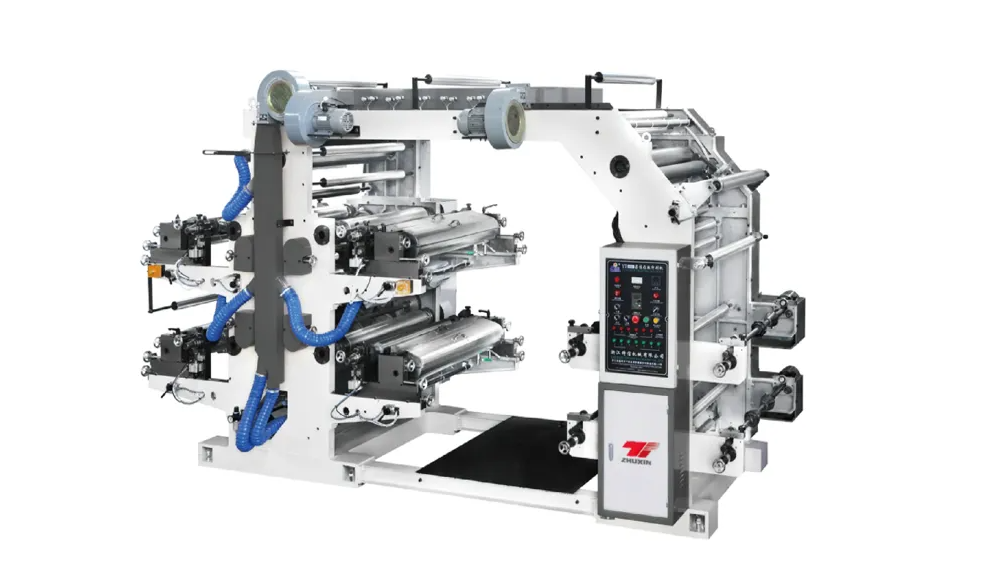
Why Medium Sized Converters Keep Choosing Flexo
When a packaging business grows past manual screen printing but cannot yet justify a high speed rotogravure line, flexo printing sits right in the sweet spot. Medium enterprises like corrugated case plants, bakeries printing their own bread bags and label converters running between five thousand and fifty thousand impressions all find that a well built flexo press pays for itself through material savings and lower waste. A tissue paper converter once calculated that switching from pre printed film to in house flexo printing on plain paper reduced packaging material cost by roughly eighteen percent, and the machine recovered its capital in under fourteen months. Flexo uses fast drying water based or UV inks and photopolymer plates that transfer a sharp image onto almost any flexible substrate. Plate technology has come a long way. Flat top dots and advanced surface screening techniques now hold highlight dots that were impossible a decade ago, bringing flexo quality close to offset for many packaging jobs. This technology gives mid size companies the freedom to offer their customers branded packaging without depending on third party trade printers and their minimum order quantities.
Anilox and Ink Delivery Systems That Control Cost and Quality
The heart of any flexo press is the anilox roll, a laser engraved ceramic cylinder that meters exactly the right amount of ink onto the plate. Choosing the correct line screen and cell volume shapes print density and dot gain directly. Too much ink floods the reverses; too little makes solid areas look starved. A converter printing frozen food boxes learned that switching from a coarser anilox to a finer screen roll with lower volume not only sharpened fine reverse text but also cut ink consumption by nearly fifteen percent. Modern mid range flexo presses now come with enclosed doctor blade chambers that keep ink viscosity stable and prevent solvent evaporation, a feature once reserved for high end central impression presses. Closed loop viscosity controls and auto washing systems may sound like luxuries, but on a press running multiple shifts they pay back quickly by reducing ink waste and freeing operators to focus on register and color consistency. The Flexographic Technical Association regularly publishes best practices on anilox selection, and following those guidelines helps medium enterprises hit brand color targets without expensive rework.
Quick Changeover and The Real Value of Operator Friendly Design
The difference between making money on short run work and losing it on setup time often comes down to how fast a press can change from one job to the next. A flexible packaging printer in the snack food sector recalled that their old stack type press required three people nearly forty minutes just to change anilox rolls and wash ink trays. After upgrading to an inline flexo press with quick release anilox sleeves and a servo driven re-register system, a single operator could complete a full four color job change in under fifteen minutes. Pre register settings and motorized print cylinder positioning mean that the first sellable sheet off the new job comes within thirty to forty impressions, not hundreds. Touchscreen controls that store job recipes for repeat orders eliminate guesswork. The European Flexographic Industry Association has noted that changeover efficiency is the single biggest productivity lever for small and medium enterprises, more impactful than raw printing speed. For a medium enterprise running fifteen or twenty jobs a day, saving ten minutes per setup translates to two or three extra hours of productive press time daily.
Built to Last While Keeping Service Simple
An affordable machine should never mean a disposable machine. The frame and impression rollers need to withstand years of continuous nip pressure without deflecting, otherwise you will chase registration drift forever. Mid range flexo presses built with thick walled side frames and ground helical gears in the printing units maintain gear pitch accuracy far longer than lightweight entry level machines. A carton printer that bought a moderately priced servo flexo press reported that after five years and over twenty million impressions, the gear backlash remained within the factory specification and the only unscheduled repair was a replaced dryer fan motor. Service simplicity matters just as much as initial build quality. Printers in remote locations cannot afford to wait two weeks for a factory technician. Machines designed with modular ink decks and common off the shelf sensors allow in house maintenance staff to handle most daily issues. Many machine builders now include remote diagnostic ports that let a factory engineer log into the PLC and read fault logs directly, a feature that a dairy packaging converter credited with cutting troubleshooting calls from four hours to twenty minutes.
The Flexibility to Chase Shorter Runs and Tighter Turnarounds
Medium enterprises thrive on agility. Big brands keep pushing inventory risk down the supply chain and ordering packaging in smaller, more frequent batches. A label converter serving craft breweries described how orders shrank from a hundred thousand labels per SKU to twenty thousand but order frequency tripled. A flexo press that can switch substrates from paper to BOPP film and back without a major reconfiguration lets that converter run both paper wrap labels and film pressure sensitive labels on the same machine. Fast plate mounting systems with video registration cameras allow accurate plate placement in seconds. This versatility means the press is not locked into one product category, which protects the investment as market demands shift. The ability to print a stable fine screen vignette on lightweight paper and then shift to a bold line solid on kraft stock within the same morning is what makes flexo the pragmatic choice. Digital hybrid machines exist, but for medium enterprises a well engineered flexo press still delivers the lowest total cost per square meter for runs between a few thousand and a few hundred thousand impressions.
How Zhuxin Brings Affordability and Reliability Together
None of these performance advantages matter if the press price pushes the return on investment beyond reach. Zhuxin has focused on building flexo printing machines that match the real workflow of medium converters, not overengineering features that only a mega plant needs. By standardizing critical components like anilox rolls, doctor blade chambers and drying hoods across its product range, Zhuxin keeps manufacturing costs predictable while still sourcing precision parts from trusted supply chains. The production facility is organized for modular assembly, which compresses delivery lead times and allows customization of print width and color stations without the cost penalties typical of one off engineering. A medium sized paper bag printer in South America shared that Zhuxin’s technical team helped configure a four color flexo press with an inline sheeter exactly to their factory floor space, and the machine was delivered and commissioned within ten weeks. After eighteen months of two shift operation, the press continues to hold tight registration on lightweight kraft paper, and any technical questions are handled through a direct support channel that provides answers within hours. For a growing enterprise, having a machine builder that treats a mid range investment with the same seriousness as a multi million dollar line makes all the difference.
Table of Contents
- Why Medium Sized Converters Keep Choosing Flexo
- Anilox and Ink Delivery Systems That Control Cost and Quality
- Quick Changeover and The Real Value of Operator Friendly Design
- Built to Last While Keeping Service Simple
- The Flexibility to Chase Shorter Runs and Tighter Turnarounds
- How Zhuxin Brings Affordability and Reliability Together