
How Automatic Paper Bag Making Machines Work: Components and Operation
Core Components of a Paper Bag Making Machine
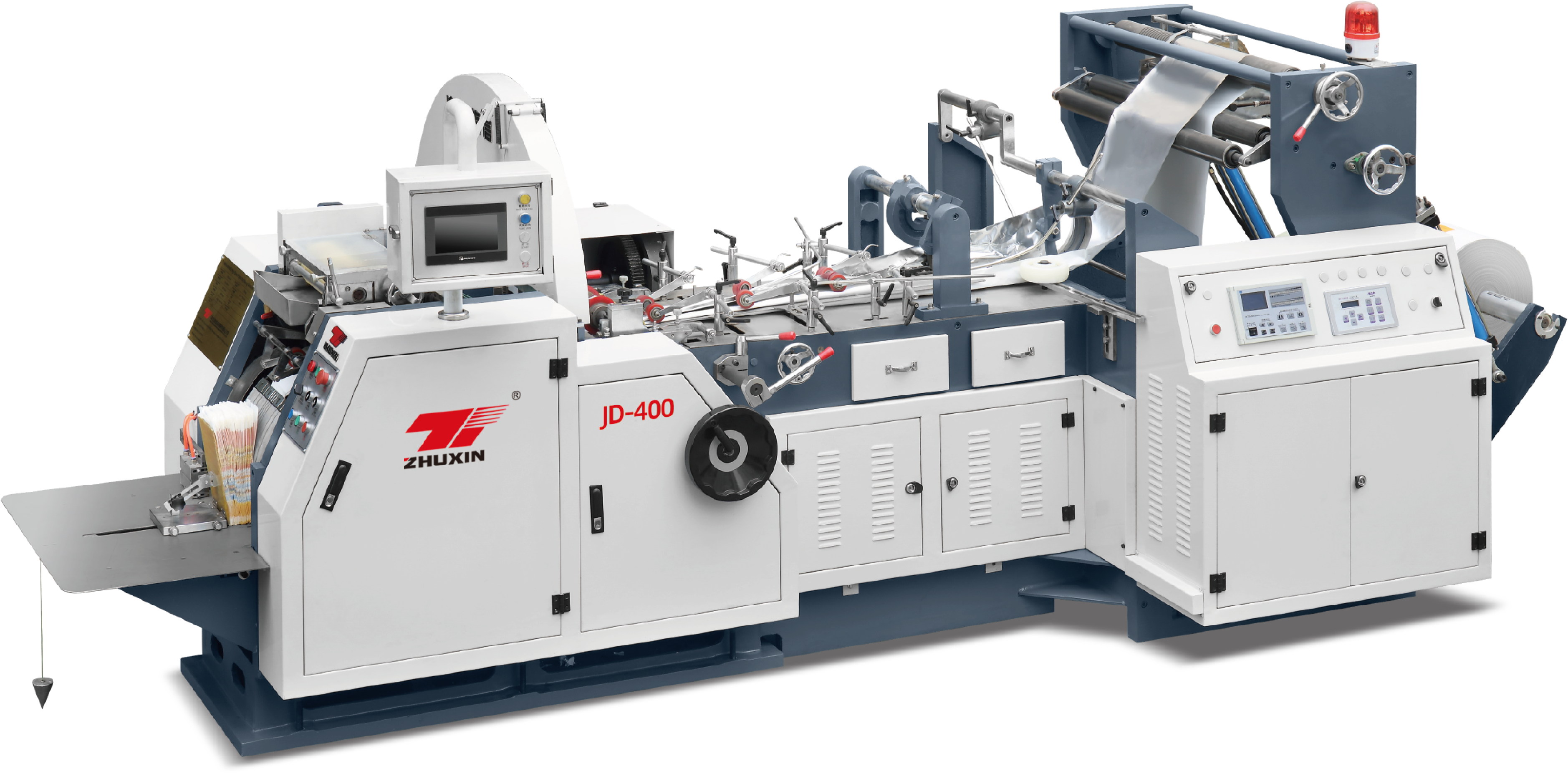
Paper bag manufacturing machines bring together multiple essential parts to turn basic paper stock into ready-to-use bags. The whole thing starts when a large roll of paper gets fed into the machine, then comes the folding mechanism which gives the bag its basic form. Next there's an automatic glue applicator that sticks the seams together properly, and finally some special rollers give the bag its final shape. Higher end machines often have built-in handle attachments too, allowing manufacturers to create different types of bags like regular grocery sacks, heavy duty versions for moving items around warehouses, or even those expandable gusseted bags we see at stores. All these steps work together thanks to a central control system called a PLC that keeps everything running smoothly. Special sensors and motor systems help maintain precise measurements throughout production, so each bag comes out looking pretty much identical to the last one.
Step-by-Step Process: From Raw Paper to Finished Bag
The whole automated production process begins when those big paper rolls get loaded onto the feeder system. Once the paper starts unwinding, it goes through several carefully timed steps. First comes folding, done exactly as specified in the design plans. Next up is applying glue to specific spots on the material. After that, special forming rollers take over, shaping the folded and glued paper into something resembling a long tube. These tubes get cut apart later to create individual bags ready for use. When everything works smoothly, finished bags just keep coming out one after another. Depending on how fast the machines run and what kind of bags are being made, factories can produce dozens each minute without needing much hands-on attention from workers.
Types of Automatic Paper Bag Machines and Their Applications
Paper bag making machines come in all sorts of shapes and sizes depending on what they need to do. The basic ones generally churn out those flat bottom shopping bags we see everywhere, sometimes with handles attached if needed. But there are also special purpose machines that can handle tougher jobs like making bags with reinforced bottoms, expandable sides (called gussets), or even printing logos and designs right onto them for marketing purposes. When it comes to speed, smaller machines usually manage around 30 to 50 bags every minute, which is fine for local shops or boutiques. However, big factories running full production lines can crank out well over 100 bags per minute when things get serious. Small business owners often go for compact models since they need something flexible enough to switch between different bag types as demand changes. Meanwhile, major manufacturers invest in complete automated systems that keep up with the massive volumes required by supermarkets and big box stores across the country. Choosing the right machine really boils down to how many bags need to be made each day, what kind of bags are wanted, and what customers actually want to buy.
Boost Production Speed and Output Efficiency Using Paper Bag Making Machine Technology
Bags Per Minute: Measuring Performance Across Machine Models
When talking about production speed, we measure it in bags per minute (BPM). Most contemporary machinery can handle anywhere from 40 up to 120 BPM depending on how they're set up and what kind of bags are being made. The basic machines usually manage around 40 to 60 BPM for regular grocery bags, whereas those fancy high speed systems hit 80 to 120 BPM when dealing with straightforward designs. Several things affect overall output including bag dimensions, whether handles are flat or twisted, and the thickness of the paper used. Naturally, more complicated setups tend to slow things down quite a bit. Thanks to some really good engineering work though, even these fast moving machines still manage to keep everything dimensionally consistent without compromising structural strength.
Case Study: High-Speed Performance at a Leading Chinese Manufacturer
One major Chinese manufacturer stands out in the market with their top-of-the-line machine that regularly hits between 100 to 120 bags per minute for regular flat handle shopping bags. The equipment features sophisticated servo motor controls along with built-in photoelectric sensors which keep the machine running at around 99.2% efficiency when operating continuously. At this rate, factories can churn out roughly 57 thousand six hundred bags across an eight hour workday. What makes this particularly impressive is how it cuts down on cost per bag while still maintaining good quality standards, so it works well for businesses needing large quantities of plastic bags day after day.
Automation Benefits with Paper Bag Making Machines: Cost Savings, Labor Reduction, and ROI
Reducing Labor Costs with Fully Automated Paper Bag Production
Paper bag machines that run completely automatically cut down on the need for workers since they take over all those tedious manual jobs like folding bags, applying glue, and attaching handles. These systems just keep going round the clock with hardly anyone watching them, which means companies don't need so many different operators anymore. Industry reports suggest that switching to automation saves businesses around 25-30% on running costs mainly because there's less money spent on wages, fewer mistakes happen during production, and new employees don't need as much training time. What's interesting is what happens to the skilled workers who were doing these tasks before. Instead of laying them off, factories often move them into better positions where their expertise matters more, like fixing equipment breakdowns or checking product quality standards. This shift not only boosts productivity but turns labor costs from something unpredictable into a steady expense that managers can plan for.
Is the Investment in Automation Worth It? Overcoming the Initial Cost Barrier
Automatic paper bag machines do cost quite a bit initially, anywhere between fifty thousand dollars all the way up past two hundred grand. But many businesses find they start seeing their money back within a year or two at most. What makes these machines worth the price tag? They save on labor costs, crank out products much faster than what humans can manage manually sometimes even triple the output. Plus there's less wasted materials because everything gets cut so precisely, and energy bills drop by somewhere between ten and thirty percent too. Take this scenario for instance: someone spends a hundred K on one of these machines but ends up saving eight thousand bucks every month. That adds up fast! Companies looking to get into automated production don't have to dive right in headfirst though. They can spread out the purchase over time, finance the equipment, or just focus automation efforts where it matters most those product lines that run constantly day after day.
Handle Integration and Material Compatibility in Advanced Paper Bag Making Machine Design
Innovations in Handle Attachment Technology for Shopping Bags
The latest generation of machinery comes equipped with built-in handle manufacturing capabilities that create and install handles all in one go. These systems rely on advanced servo motors paired with light-sensitive sensors to get those handles positioned just right across different materials like standard paper handles or the stronger rope versions needed for heavier products. When companies stop making handles separately from their main production line, they cut down on manpower requirements, generate less scrap material, and generally keep things moving faster through the factory floor. The tooling setups can be swapped out pretty quickly too, so when customers start asking for different handle designs next week instead of this week, the production team doesn't have to grind to a halt waiting for equipment changes.
Supporting Diverse Bag Specifications Through Flexible Machine Design
Modern packaging machines come with built-in versatility, capable of working with all sorts of materials and bag designs. These systems can process various paper types including regular kraft, recycled stock, and even specialty coated papers without needing much downtime between setups. The feeding system combined with smart tension control keeps everything running smoothly no matter what kind of paper thickness or surface quality comes through. Manufacturers love the adjustable forming heads and computer controlled folding units because they let operators switch between different bag sizes pretty quickly. We're talking anything from those little snack bags found at grocery stores right up to big industrial carrier bags. All this flexibility means companies don't have to invest in separate machines for each product category, which saves money in the long run while keeping production lines efficient across multiple product ranges.
Ensuring Quality: Precision Control Systems in Automatic Paper Bag Machines
Modern paper bag making machines rely on sophisticated control systems to ensure consistent, high-quality output across all production phases. These systems integrate real-time monitoring and adjustment capabilities to maintain strict adherence to dimensional, structural, and aesthetic standards.
Role of Photoelectric Sensors and Servo Motors in Accuracy
Getting micron level precision in packaging machines really depends on good photoelectric sensors paired with quality servo motors. These sensors keep an eye on where the paper is positioned during all those tricky steps from feeding through folding right up to cutting. They make sure everything lines up properly when it matters most. Meanwhile, the servo motors handle the fine details of movement for important parts like cutting blades, folding mechanisms, and handle placement systems. Working hand in hand, these components can hold tight tolerances around half a millimeter even while cranking out over 200 bags every single minute. And they manage to sync up all these different operations without missing a beat. Without this kind of coordination, we'd see problems like paper drifting off course, uneven cuts happening here and there, or glue getting applied incorrectly somewhere it shouldn't be. Every bag that comes off the line needs to match those strict specs after all.
Maintaining Consistent Gluing, Folding, and Cutting Quality
The whole operation maintains consistency across gluing, folding, and cutting thanks to those PLC controlled systems that tweak settings as needed during production runs. The glue applicators are pretty smart too - they control just the right amount of adhesive so there's no risk of weak spots or messy overflow getting everywhere. When it comes to folding, the machines can handle everything from lightweight stock to heavier papers without missing a beat, creating those sharp folds customers expect. Cutting is handled by high precision equipment with servo driven blades that slice through materials cleanly each time, making sure every bag looks professional. All these components actually talk to each other behind the scenes, which means manufacturers end up with bags that hold together well and look good enough for stores that demand top quality packaging solutions day after day.
FAQs
What are the main components of a paper bag making machine?
The core components include a paper feeder system, folding mechanism, glue applicator, forming rollers, and a PLC control system with sensors.
How do automatic paper bag machines improve production speed?
They streamline operations through automation, allowing consistent output with minimal human intervention, often producing between 40 to 120 bags per minute.
Are there different types of paper bag machines?
Yes, machines range from basic models producing simple grocery bags to advanced ones handling reinforced bottoms, expandable gussets, and printed designs.
What benefits do automation systems provide for paper bag production?
Automation reduces labor costs, enhances production speed, decreases material waste, and improves overall efficiency.
Can automatic machines handle various types of bag specifications?
Modern machines offer flexibility in design, accommodating different paper types, thicknesses, and bag sizes without requiring separate equipment.
Table of Contents
- How Automatic Paper Bag Making Machines Work: Components and Operation
- Boost Production Speed and Output Efficiency Using Paper Bag Making Machine Technology
- Automation Benefits with Paper Bag Making Machines: Cost Savings, Labor Reduction, and ROI
- Handle Integration and Material Compatibility in Advanced Paper Bag Making Machine Design
- Ensuring Quality: Precision Control Systems in Automatic Paper Bag Machines
-
FAQs
- What are the main components of a paper bag making machine?
- How do automatic paper bag machines improve production speed?
- Are there different types of paper bag machines?
- What benefits do automation systems provide for paper bag production?
- Can automatic machines handle various types of bag specifications?