
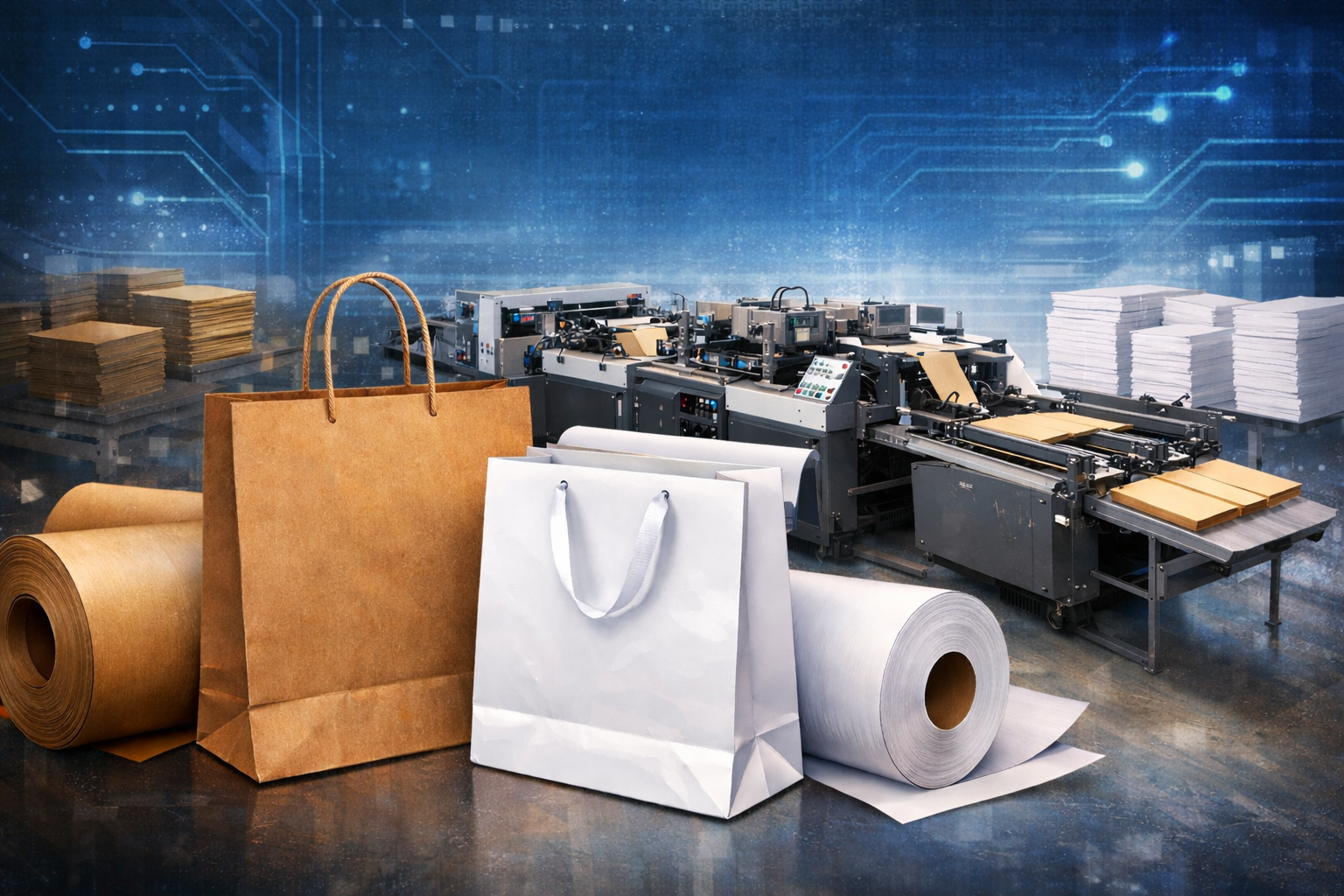
Why Dual-Material Compatibility Defines Modern Paper Bag Making Machine Performance
The Market Imperative: Rising Demand for Hybrid Packaging Solutions
More brands are looking for packaging solutions that somehow manage to be both green and practical at the same time. This has created a growing need for machinery that can handle different types of paper materials. Think about it: regular kraft paper which is unbleached and quite porous versus those smooth coated papers treated with barriers against moisture. The new hybrid production lines cut down on switching between materials by around forty percent compared to older systems that only worked with one type of material. Manufacturers love this because they can switch from making simple grocery bags to fancy retail packaging without spending a fortune on equipment changes according to Packaging Digest last year. And let's face it, consumers want their cake and eat it too when it comes to packaging. A recent study found that nearly eight out of ten shoppers care about going green with their purchases, but almost two thirds still won't accept anything that feels flimsy or cheap. The Sustainable Packaging Coalition reported these numbers back in 2023.
Core Engineering Enablers: Adaptive Tension Control, Variable-Glue Delivery, and Thermal Modulation
High-performance paper bag making machines overcome material inconsistencies through three integrated systems:
- Adaptive tension control dynamically adjusts roller pressure to prevent tearing of lightweight kraft (60 gsm) while avoiding slippage on high-density coated stocks (180 gsm);
- Variable-glue delivery switches between high-penetration adhesives for porous kraft and low-migration formulas for coated papers within the same run;
- Thermal modulation ensures consistent seal integrity—applying higher heat for moisture-resistant coatings and lower temperatures for heat-sensitive recycled kraft.
Together, these systems reduce waste by 22% and increase uptime to 95% in dual-material operations [FlexTech Alliance 2023].
Material-Specific Challenges: How Kraft and Coated Papers Affect Paper Bag Making Machine Output
Kraft Paper: Managing Porosity, Absorbency, and Structural Integrity
The porous nature of kraft paper means it soaks up around 30 percent more adhesive compared to coated papers, which makes controlling glue amounts really important in manufacturing. When exposed to normal humidity levels, the paper fibers tend to swell in ways that are hard to predict. This swelling requires special tension control systems just to keep things from falling apart when running at high speeds through converters. Different weight grades between 60 and 180 grams per square meter expand anywhere from 15 to 20 percent, so machines need adjustments for these variations. Stronger folding equipment helps stop tears at fold points where stress tends to concentrate. If dried too much above 150 degrees Fahrenheit, the fibers become brittle and actually tear more easily by about 22 percent, making temperature management absolutely essential throughout processing. Smart production setups incorporate sensors that detect moisture levels along with adjustable pressure rollers at contact points, helping maintain proper strength characteristics while still keeping the final product durable enough for its intended use.
Coated Paper: Overcoming Low Surface Energy and Glue Adhesion Limitations
Surfaces coated with polyethylene or clay typically measure under 34 dynes per centimeter in surface energy, which is about 40 percent less than regular uncoated kraft paper. This makes them naturally repel water and resist sticking to common adhesive products. Modern paper bag production lines handle this challenge using two main approaches: one employs high frequency ultrasonic sealing at around 20 kilohertz with 500 watts power, while others rely on carefully controlled hot melt systems running hot enough to reach 350 degrees Fahrenheit. Before bonding occurs, special corona treatment devices prepare these surfaces, increasing their ability to form strong bonds by roughly 60% thanks to changes at the molecular level. Additional electrostatic control mechanisms keep things aligned properly during manufacturing, since static electricity can cause problems otherwise. Meanwhile, specially designed cutting tools adjust themselves automatically to work with the different compression characteristics of coated materials, maintaining over 98% operational efficiency throughout the process and preventing those frustrating layers from separating later on.
Optimized Manufacturing Workflow for Mixed-Material Runs on a Paper Bag Making Machine
Precision Web Handling and Synchronized Cutting Across Basis Weights (60–180 gsm)
Advanced tension control systems powered by servos work alongside laser guided registration tech to keep materials intact even at blistering speeds over 200 bags per minute. These systems compensate for the natural expansion of kraft paper when exposed to humidity changes (sometimes expanding up to 3%) as well as handle the stiffness issues with coated papers. When production switches from lighter weight food grade papers at around 60 grams per square meter to heavier duty retail materials weighing about 180 grams per square meter, real time monitoring kicks in to adjust roller pressures and feeding rates accordingly. According to recent industry benchmarks, this approach cuts down on misaligned products by roughly 27%, which makes a big difference in overall efficiency. For cutting operations, synchronized rotary blades maintain an impressive accuracy range of plus or minus 0.15 millimeters across different types of substrates. This level of precision helps ensure consistent gusset formation even when running multiple product types together on the same line.
Intelligent Gluing Strategy: Cold-Glue Folding for Kraft vs. Ultrasonic Sealing for Coated Paper
Modern workflows deploy material-specific bonding: high-viscosity cold glue injected at 45° angles penetrates kraft fibers without leakage, while ultrasonic sealing activates coated surfaces molecularly at 20 kHz—preventing delamination. Temperature-controlled applicators dynamically adjust viscosity based on real-time porosity readings, delivering seam strengths exceeding 15 N/15 mm across all grammages without manual recalibration.
Real-World Validation: Uptime, Quality, and ROI in Hybrid Production Mode
Paper bag manufacturing facilities equipped with modern dual material machines typically maintain around 95% uptime thanks to quick changeover features and built-in jam prevention mechanisms. These improvements cut down on unexpected shutdowns and keep production moving at consistent speeds. The machines come with smart vision systems that spot flaws as they happen, which helps keep defect rates under half a percent for both standard kraft paper and specialty coated materials. Looking at return on investment, these systems save money through less wasted product, quicker production cycles, and needing fewer workers to monitor operations. Most plant managers report getting their money back within somewhere between 18 to maybe 24 months after installation, depending on how heavily they run the equipment.
FAQ
Why is dual-material compatibility important in paper bag making machines?
Dual-material compatibility allows manufacturers to switch between different types of paper materials such as kraft and coated paper without needing separate machinery, thereby reducing costs and increasing efficiency.
How do modern paper bag machines manage different material types during production?
Modern machines use integrated systems like adaptive tension control, variable-glue delivery, and thermal modulation to handle inconsistencies between kraft and coated paper efficiently.
What challenges does kraft paper pose in production?
Kraft paper is porous and absorbs more adhesive, which can lead to swelling, requiring specialized tension control systems to keep production smooth and efficient.
How is coated paper different from kraft paper in terms of production challenges?
Coated papers have low surface energy which makes them repel adhesives, requiring techniques like ultrasonic sealing and hot melt systems to ensure proper bond formation.
What is the typical ROI timeframe for a modern dual-material paper bag making machine?
Most paper bag manufacturing facilities report return on investment within 18 to 24 months due to improved efficiency and reduced waste.
Table of Contents
- Why Dual-Material Compatibility Defines Modern Paper Bag Making Machine Performance
- Material-Specific Challenges: How Kraft and Coated Papers Affect Paper Bag Making Machine Output
- Optimized Manufacturing Workflow for Mixed-Material Runs on a Paper Bag Making Machine
- Real-World Validation: Uptime, Quality, and ROI in Hybrid Production Mode
-
FAQ
- Why is dual-material compatibility important in paper bag making machines?
- How do modern paper bag machines manage different material types during production?
- What challenges does kraft paper pose in production?
- How is coated paper different from kraft paper in terms of production challenges?
- What is the typical ROI timeframe for a modern dual-material paper bag making machine?