
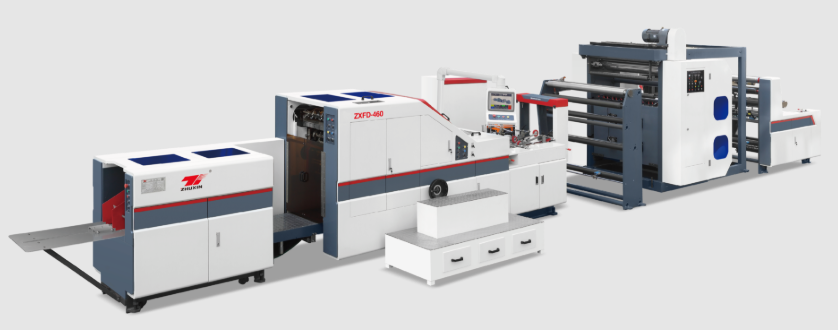
Buying a paper bag machine is one of the most important capital decisions a packaging business will make. Get it right, and the machine becomes a reliable profit center for a decade or more. Get it wrong, and you are stuck with a line that is too slow, too limited, or too expensive to run — with no easy way out. The good news is that choosing the right machine follows a logical process: assess your production volume, define your bag type requirements, understand your budget honestly, and only then compare models. This guide walks you through each step so you can buy with confidence.
1. Assess Your Production Volume
Every machine is rated for a maximum speed — but your real requirement is the volume you must produce, day in and day out. Start with these questions:
-
What are your committed orders per month today?
-
What growth do you realistically expect in 12 and 24 months?
-
How many hours per shift will the machine run?
Then do the math. Suppose your orders need 100,000 bags per month and you plan one 8-hour shift, 26 days per month: that is roughly 480 bags per hour, or 8 bags per minute. A machine rated at 60 pcs/min would be comfortable; a 200 pcs/min machine would be overkill unless you plan to grow fast or run multi-shift.
A useful rule: choose a machine whose rated speed is 2–3 times your current average demand. That headroom covers peaks, downtime, maintenance stops, and growth — without paying for capacity you cannot fill. Machines run most efficiently at 60–80% of rated speed anyway, since quality and paper stability suffer at absolute maximum speed.
2. Define Your Bag Type Requirements
Your product mix determines the machine category. Ask what your customers actually need:
-
Square bottom bags (standing upright, premium appearance): used by bakeries, coffee shops, fast-food, and retail gift packaging. Produced on square bottom machines such as the ZXFD-290, up to 200 pcs/min.
-
Sharp bottom bags (V-bottom, flat-lying): the workhorse for high-volume commodity bags — bread bags, small takeaway bags. Produced on sharp bottom machines like the ZXJD-450 at 50–600 pcs/min.
-
Middle sealing bags (seam in the middle of the panel): specialty products such as seedling protection bags and certain clean bags. Produced on middle sealing machines like the CY-450 at 30–80 pcs/min.
Within each category, verify the size ranges you need: bag width, length, bottom width, and paper weight. A machine's adjustable range defines the orders you can accept. If your customers order bags from 10 cm to 30 cm wide, a machine that only handles 15–25 cm will lose you business.
Also consider future bag styles. Many buyers choose a machine with handle options (twisted paper handles, flat handles, die-cut handles) even if they do not produce handled bags today — retrofitting a machine for handles later is more expensive than buying the capability upfront.
3. Plan Your Printing Capability
Printing is where most paper bag businesses differentiate — and where many buyers under-invest. Decide early:
-
No printing: You compete on price with commodity unprinted bags.
-
Simple logo printing: An inline flexo printing unit on the bag machine prints one or two colors during bag production — the most economical path.
-
Multi-color, high-quality printing: A standalone flexo printing machine (such as the YT-S series, up to 160 m/min) offers better color control and flexibility, especially for white kraft or heavy-coverage designs.
If brand marketing matters to your customers — and it does for bakery, coffee, and retail clients — budget for printing from the start. Retrofitting a line for printing later is disruptive and more expensive.
4. Build a Complete Budget
The purchase price is only part of the real cost. Build a complete picture:
-
Installation, freight, and customs: Typically 5–15% of machine price depending on distance and port.
-
Training and commissioning: Included by reputable manufacturers; confirm before purchase.
-
Spare parts: Stock the wear items the manufacturer recommends; this is a modest cost that prevents expensive downtime.
-
Raw materials and consumables: Paper, glue, and printing inks are ongoing costs that dwarf the machine price over its lifetime — factor them into your product costing.
-
Energy consumption: Note the machine's rated power. A 20 kW difference in average draw at 200 operating hours per month is meaningful annual cost.
-
After-sales quality: The cheapest machine is rarely the best buy. Verify the manufacturer's warranty terms, spare parts availability, response times, and whether remote technical support is offered. Zhuxin, for example, provides lifetime after-sales service and full technical support on every machine — support quality is a budget item, not a freebie.
A practical framework: total budget = machine price + 15–20% for installation and freight + working capital for three months of materials and labor.
5. Verify the Supplier Before You Buy
Before you pay a deposit, verify the supplier thoroughly:
-
Check ISO 9001 certification — evidence of an audited quality management system.
-
Request customer references in your region or industry, and contact them.
-
Ask for a live video demo or a factory visit to see the machine running at speed.
-
Confirm the spare parts list and supply commitment — how long will parts remain available?
-
Review the training plan — how many operators will be trained, and for how long?
Then compare quotes on equal footing: same machine configuration, same accessories, same warranty, same training scope. The lowest headline price often hides a smaller configuration — confirm what is included before comparing.
Conclusion
Choosing the right paper bag machine comes down to discipline: honest volume projections, a clear definition of the bag types and sizes you need, printing capability matched to your market, a complete budget, and a thoroughly verified supplier. Follow these steps and your machine will not just run — it will be the engine of your business for years.
Zhejiang Zhuxin Machinery Co., Ltd offers a complete range of paper bag machines — square bottom, sharp bottom, and middle sealing — plus YT-S flexo printing presses, all ISO 9001 certified and backed by lifetime after-sales service. Our engineers will help you assess your volumes, select the right configuration, and plan your factory layout. Contact Zhuxin today for a tailored proposal for your business.