
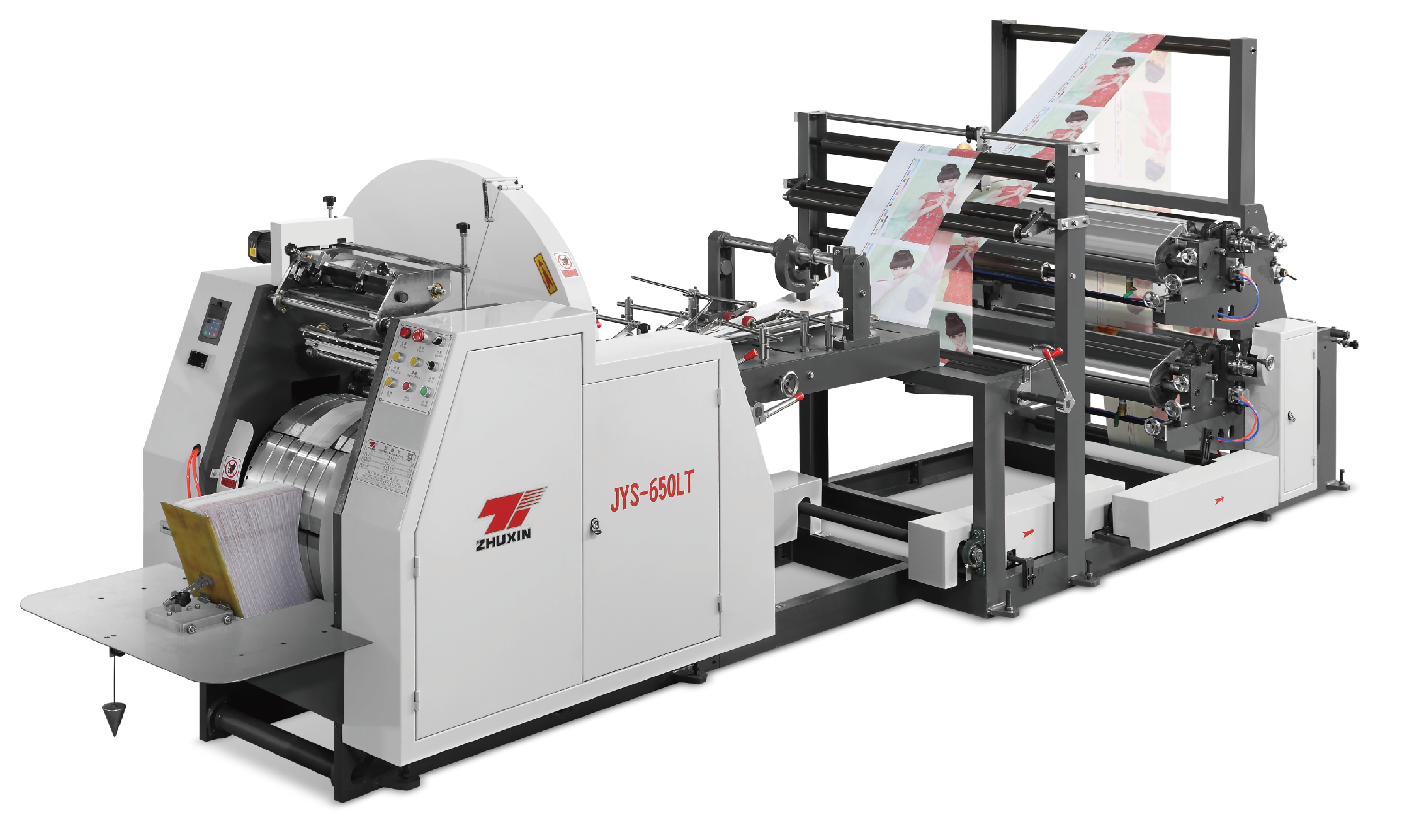
Typical Service Life of a Paper Bag Making Machine Under Normal Operating Conditions
Most paper bag making machines will last around 10 to 15 years if they run about 8 to 12 hours each day and get regular maintenance. But operators need to watch out for overloading them beyond about 85% capacity since that can shorten their lifespan significantly. According to recent research from packaging equipment experts in 2023, machines working with standard weight papers (around 60 to 120 grams per square meter) tend to last about 30% longer than those dealing with heavier materials. Several important factors determine how long these machines stay productive before needing replacement or major repairs.
- Annual operating hours (recommended ≈ 4,000)
- Frequency of material changes (which increases mechanical stress)
- Ambient conditions (ideal: humidity <60%, temperature 15–25°C)
Key Design and Material Factors That Enhance Machine Durability
Durable machines feature one-piece cast iron frames, which are 30–40% heavier than welded steel alternatives, providing superior vibration absorption. Additional durability-enhancing features include:
- Hardened steel guide rails with HRC 58–62 hardness
- Titanium-coated cutting blades that last 2–3 times longer than standard blades
- Modular component design enabling isolated replacement of wear-prone parts
These engineering choices reduce cumulative stress and extend service intervals.
Role of Servo Motor Control in Ensuring Long-Term Operational Stability
Servo-driven systems eliminate gear backlash and deliver precise motion control, maintaining positioning accuracy within ±0.1mm over 20,000+ operating hours. Compared to traditional AC motors, servos significantly reduce mechanical degradation by adapting torque output to real-time material demands. This results in:
- 67% fewer misalignment incidents (Packaging Trends 2024)
- 40% reduction in bearing replacements
Improved operational stability makes servo technology a cornerstone of long-term machine reliability.
Comparative Durability: Roll-Fed vs. Sheet-Fed Paper Bag Making Machines
| Feature | Roll-Fed Systems | Sheet-Fed Systems |
|---|---|---|
| Mechanical Complexity | 12–15 moving parts | 25–30 moving parts |
| Mean Time Between Failures | 1,800–2,200 hours | 1,200–1,500 hours |
| Alignment Stress | Continuous web tension | Intermittent sheet stops |
Roll-fed systems offer superior durability due to continuous material flow and 40% fewer component interactions. In contrast, sheet-fed machines experience higher wear from repeated start-stop cycles, requiring more frequent clutch and brake maintenance.
Core Components and Automation Technology for Reliable Performance
Essential Components of an Automatic Paper Bag Making Machine
Today's automated machinery typically includes three main parts: systems for feeding materials, stations where products get shaped precisely, and smart quality checking components. Feeding systems rely on those servo-controlled roller stands paired with feedback loops that keep paper moving at just the right speed. At the forming stations we find heated sealing jaws working alongside adjustable folding mechanisms. Some top-of-the-line machines actually spend around a quarter of their budget on sensors alone according to industry reports from 2025. These sensors play a huge role in maintaining production standards across expensive automation equipment.
How Servo Systems Improve Precision and Reduce Mechanical Wear
By replacing mechanical linkages with digitally controlled actuators, servo systems reduce cumulative wear by 40–60% compared to cam-based drives. They maintain positional accuracy within 0.1mm during high-speed operations, minimizing vibration and stress on bearings and drive trains (OEM Off-Highway 2024).
Smart Sensors and Real-Time Monitoring for Predictive Maintenance
Integrated vibration sensors monitor motor health, while infrared arrays track seal bar temperatures with ±2°C accuracy. These inputs feed into machine learning algorithms that predict bearing failures 300–500 operating hours in advance, enabling timely interventions without unplanned downtime.
Balancing Automation Level with Ease of Maintenance
Modular architectures allow rapid replacement of high-wear components like gripper jaws without full system shutdowns. Ergonomically positioned access panels reduce maintenance time by up to 30%, ensuring that advanced automation does not compromise serviceability.
Machine Design and Production Process for Extended Service Life
Overview of the Automated Paper Bag Manufacturing Process
Modern machines streamline production through synchronized stages: feeding, forming, sealing, and cutting. High-speed servo motors enable operation at up to 150 bags per minute while maintaining ±0.15 mm positional accuracy. This integrated workflow reduces unnecessary motion and minimizes mechanical stress across components.
Roll-Fed Technology and Its Advantages in Reducing Mechanical Stress
Roll-fed systems exhibit 30% lower wear rates than sheet-fed counterparts, thanks to continuous material flow that eliminates repetitive start-stop cycles. Guided unwinding maintains optimal web tension, reducing strain on drive systems. Industrial engineering studies show optimized roll-track designs can extend gearbox service life by 40–60% (2023 Material Durability Report).
Material Handling, Tension Control, and Alignment in Durable Machine Design
Advanced machines use closed-loop tension regulation to maintain ±0.5 N consistency across all speeds. Laser alignment sensors automatically correct deviations under 0.2 mm, preventing premature blade wear from misaligned cuts. Combined with modular construction, these features help achieve MTBF ratings exceeding 1,800 hours—25% better than earlier generations (Automation Technology Review).
Maintenance Best Practices to Maximize Machine Longevity
Proactive maintenance extends machine lifespan by 40–60%. Success depends on consistent upkeep, reliable spare parts supply, and data-driven operational adjustments.
Routine Maintenance Tasks for Optimal Performance and Uptime
Daily and weekly routines prevent 82% of mechanical failures:
- Lubricate gearboxes and linear guides every 150 operating hours
- Verify alignment of feed systems and cutting mechanisms
- Calibrate sensors to sustain ±0.1mm positioning accuracy
Manufacturers using digital checklists report 29% less unplanned downtime than those relying on manual tracking methods (2023 maintenance study).
Availability and Sourcing of Spare Parts for Paper Bag Making Machines
Stock high-wear components—such as servo motor brushes and gripper jaws—based on production volume. Use OEM-grade replacements; third-party alternatives fail 3.2x faster in tension control systems according to durability testing. Regional supplier networks now deliver critical spares within 48 hours to 94% of global industrial zones.
Case Study: Achieving High Reliability Through Proactive Maintenance
A manufacturer using IoT-enabled condition monitoring reduced emergency repairs by 67% over 18 months. Their strategy included biweekly vibration analysis on drive units, monthly thermal imaging of electrical panels, and predictive replacement of wear components. This approach cut annual maintenance costs by $18,000 per machine and achieved 98.6% operational availability (Maintenance analytics).
Frequently Asked Questions (FAQ)
How can I maximize the lifespan of my paper bag making machine?
To maximize the lifespan of your paper bag making machine, ensure regular maintenance, avoid overloading past 85% capacity, and operate within recommended conditions—about 4,000 annual operating hours in ideal ambient conditions (humidity <60%, temperature 15-25°C).
What design elements contribute to a durable paper bag making machine?
Key design elements include one-piece cast iron frames, hardened steel guide rails, titanium-coated cutting blades, and modular component designs. These features improve vibration absorption, mechanical precision, and service intervals.
Why are servo motors critical to machine reliability?
Servo motors provide precise motion control and reduce mechanical degradation by adapting torque output to real-time demands, resulting in fewer misalignments and bearing replacements, thus enhancing operational stability.
How do roll-fed systems compare to sheet-fed systems in terms of durability?
Roll-fed systems offer superior durability due to continuous material flow and fewer component interactions, unlike sheet-fed machines which face higher wear from repeated start-stop cycles.
What are the maintenance best practices for these machines?
Regular lubrication, alignment checks, and sensor calibration help prevent mechanical failures. Stocking OEM-grade spare parts and using digital maintenance checklists can further reduce downtime.
Table of Contents
- Typical Service Life of a Paper Bag Making Machine Under Normal Operating Conditions
- Key Design and Material Factors That Enhance Machine Durability
- Role of Servo Motor Control in Ensuring Long-Term Operational Stability
- Comparative Durability: Roll-Fed vs. Sheet-Fed Paper Bag Making Machines
- Core Components and Automation Technology for Reliable Performance
- Machine Design and Production Process for Extended Service Life
- Maintenance Best Practices to Maximize Machine Longevity
-
Frequently Asked Questions (FAQ)
- How can I maximize the lifespan of my paper bag making machine?
- What design elements contribute to a durable paper bag making machine?
- Why are servo motors critical to machine reliability?
- How do roll-fed systems compare to sheet-fed systems in terms of durability?
- What are the maintenance best practices for these machines?