
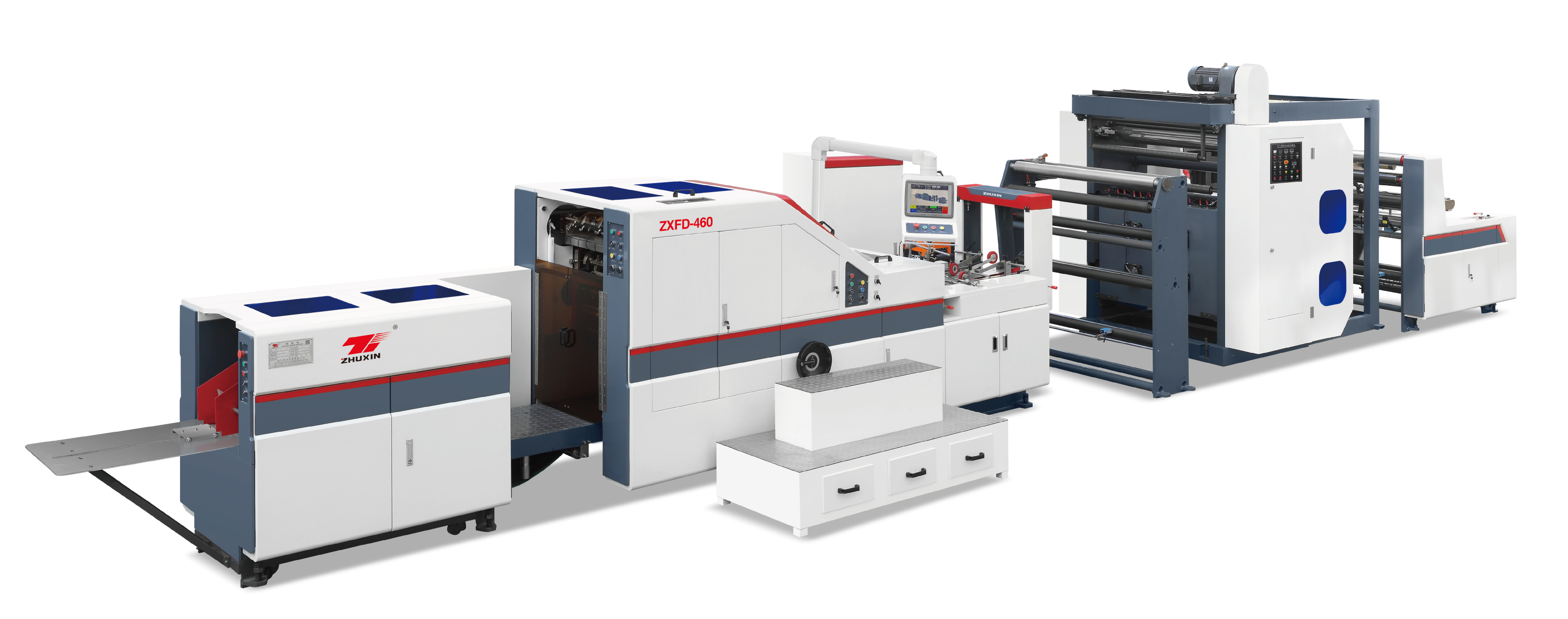
How a Paper Bag Making Machine Transforms Raw Rolls into Finished Bags
The Evolution of Bag Making Machinery and Automation in Packaging
Back in the early 1900s, those old machines needed someone standing right there watching every fold and glue job happen by hand. Pretty tedious work if you ask me. Fast forward to today, paper bag makers are running these high tech beasts equipped with servo motors and robotic arms guided by cameras. Some factories can crank out over 200 bags per minute now! The whole packaging world has changed quite a bit lately. According to recent data from the Global Packaging Automation Report, around three quarters of manufacturers have jumped on the automation bandwagon mainly because they want greener operations without sacrificing volume. Old school equipment used to choke on multiple layers of material, but new designs tackle both recycled and fresh paper rolls just as well. And guess what? Companies report cutting down on wasted materials by nearly 20% when switching from manual processes to these automated systems.
Key Components of a Paper Bag Making Machine: Web Forming, Cutting, and Gluing
Three subsystems drive production efficiency:
- Web forming: Converts flat paper rolls into a continuous tubular shape using a series of overlapping rollers
- Laser-guided cutting: Servo-driven blades slice the tubular web into bag-length segments with ±0.2mm accuracy
- Adhesive application: Programmable glue nozzles apply biodegradable adhesives only to seam areas, using 23% less adhesive than manual methods
According to packaging engineering studies, modern servo systems synchronize these components to maintain tolerances tighter than 0.1mm even at 30m/min web speeds. This precision ensures handles, gussets, and side seams align perfectly across thousands of consecutive bags.
From Roll to Finished Product: The Automated Paper Bag Assembly Workflow
A single automated line converts paper rolls into retail-ready bags in 6 streamlined stages:
- Roll loading & tension control
- Tube forming and side seam adhesion
- Cross-cutting to bag height specifications
- Bottom folding and reinforcement
- Handle attachment (for totes)
- Quality inspection via AI-powered cameras
Advanced machines complete this cycle in under 8 seconds per bag while maintaining 99.4% operational uptime. Facilities using integrated automation report 60% faster order fulfillment compared to semi-automated setups, particularly when switching between custom print jobs and blank bag production.
Integrated Printing Systems in Paper Bag Making Machines: Flexo vs. Offset
Synchronizing Sheeting and Printing of Paper Bags on One Production Line
Modern paper bag making machines unify sheeting and printing through automated roll-to-roll systems. This synchronization eliminates manual substrate handling between stages, reducing alignment errors by 30% while achieving speeds of 400—600 bags/hour. Integrated sensors maintain tension control, ensuring print registration accuracy within ±0.5 mm across 100+ meter paper rolls.
Flexographic vs. Offset Printing in the Manufacturing Steps of Paper Bags
Most paper bag manufacturers rely on flexographic printing because it works so well with materials that have pores, such as kraft paper. Traditional offset presses need completely flat surfaces to function properly, but flexo systems with those special photopolymer plates can actually handle rougher textures without losing quality. These flexo machines still manage to produce images at around 1200 dpi resolution even on uneven surfaces. According to a recent study from the 2024 Material Compatibility Report, flexographic printing maintains about 98% color consistency when printed on different types of recycled paper. That's pretty impressive when compared to offset printing which only hits around 82% consistency on the same kinds of paper. The difference really matters for companies looking to maintain brand standards across their packaging products.
Minimizing Waste and Maximizing Consistency in Printed Roll Processing
Advanced ink viscosity controls and automated plate cleaning systems reduce startup waste by 40% in modern machines. Real-time vision systems detect defects at 200 FPM, diverting flawed sections for repulping. This precision cuts material waste to <3% of total roll volume, versus 8—12% in traditional workflows.
How Integrated Printing Enhances Efficiency in Blank and Printed Paper Roll Conversion
Combining printing with converting stages slashes production lead times by 55%. Machines processing pre-printed rolls achieve 15% higher throughput by eliminating separate print shop coordination. The integration allows manufacturers to switch between blank and custom-printed batches in under 15 minutes, supporting just-in-time delivery for retail clients.
Custom Branding Opportunities Enabled by Advanced Paper Bag Making Machines
Customizing Paper Bags with Integrated Printing (Flexo/Offset) Stations
Paper bag manufacturing equipment now stands out from competitors thanks to inline printing tech that keeps registration within about 0.1 mm accuracy. The flexographic printing stations work best at speed ranges between 150 to 300 bags per minute, great for basic logo applications. Meanwhile, offset printing modules can hit over 1200 DPI resolution which makes them perfect when companies want those realistic photo quality prints on their packaging. According to recent findings from the Packaging Innovation Report released in 2024, factories that have these combined printing and bag making systems report cutting down their setup times by roughly 40 percent compared with places where printing happens separately from actual bag production.
How Modern Paper Bag Making Machines Support Brand-Specific Designs
Advanced machines accommodate custom handle shapes, window cutouts, and QR code integration through programmable servo systems. Dynamic foil stamping modules enable luxury finishes without slowing production below 200 bags/minute. Over 78% of retailers now demand variable data printing for localized promotions, a capability enabled by machines with digital front-end interfaces.
Case Study: Retail Brand Transition to Customized Paper Bags
One major European clothing retailer recently managed to maintain completely consistent branding across all their 1,200 stores throughout Europe thanks to specialized machinery provided by Zhejiang Zhuxin Machinery. Their approach mixed traditional flexographic printing techniques with modern QR code printing capabilities right at the point of production. This clever combination cut down on wasted stock materials by nearly two thirds according to figures released by Zhuxin in 2023. What makes this particularly impressive is how adaptable the system proved to be in practice. The machines can switch from one of twelve different bag designs to another within the same day while still running at around 85% efficiency levels. For a business operating on such a massive scale, this kind of operational agility represents a real breakthrough in supply chain management.
Automation and Efficiency Gains in High-Volume Paper Bag Production
Web Forming, Cutting, and Gluing in Bag Production: Precision and Speed
The latest generation of paper bag manufacturing equipment delivers remarkable precision thanks to synchronized web forming techniques, cutting mechanisms accurate down to the microsecond level, and advanced adhesive systems that place glue within just half a millimeter tolerance. These machines use servo motors for component movement, allowing quick switches between different bag weights ranging from 15 to 50 pounds without needing any manual adjustments. The infrared drying technology speeds up seam curing by around 40 percent when compared to older methods. According to recent industry reports on packaging efficiency published last year, these technological improvements cut down on material waste by somewhere between 12 and 18 percentage points over what we see with semi-automated production lines.
Data Insight: Automation Increases Output by up to 60% in High-Volume Facilities
Factories that have switched to fully automated paper bag machines are seeing massive gains in productivity. Some facilities report anywhere from 53 to 60 percent more output compared to traditional methods. These automated systems can crank out between 15,000 and 18,000 bags each hour, while manual operations typically manage only around 6,000 to 8,000 bags. The real magic happens behind the scenes where sensors constantly monitor and adjust the tension in the material web as it moves through the machine at speeds ranging from 100 to 150 meters per minute. This keeps defects extremely low, usually below 0.3%, even when running at full capacity. Looking at data from 72 different manufacturing plants in 2023, researchers found that these automated production lines actually consume 22% less energy per bag produced because they distribute motor loads more efficiently throughout the process.
Core Stages in the Paper Bag Production Process Using Automated Systems
- Roll-to-Web Conversion: Laser-guided unwinders feed paper rolls with 99.8% alignment accuracy
- Forming & Printing: Simultaneous creasing/folding and inline digital printing (3—8 colors)
- Quality Assurance: AI vision systems inspect 200 bags/second for structural defects
- Packaging: Robotic arms stack finished bags in brand-specific configurations
Automated workflow integration eliminates 85% of manual handling errors while enabling 24/7 production cycles. These advancements position modern paper bag making machines as essential for manufacturers targeting <3% operational downtime and >95% order fulfillment accuracy.
Market Trends Driving Demand for Paper Bag Making Machines
Global shift from plastic to paper: Impact on the paper bag manufacturing process
Since 2020, over 127 different places around the world have banned single-use plastics, pushing many manufacturers to switch about 60 percent of their packaging operations to paper instead. These days, automated machines for making paper bags let factories handle anywhere from 6 to 8 metric tons of paper rolls each day, all while staying compliant with the latest regulations according to that big packaging compliance report they released in 2025. Plants that adopted this equipment are seeing roughly half the material waste when compared to what happens during plastic conversions, which makes sense given how much easier it is to recycle paper products than most plastics.
Rise of e-commerce and retail branding fueling demand for custom paper bag options
E-commerce packaging needs about 23 percent more branded paper bags each year than what traditional stores require, which is why companies are increasingly turning to machines that have built-in flexographic printing capabilities. According to recent market research, around 8 out of 10 shoppers actually think that paper bags with custom prints boost a brand's image significantly. Plus, when manufacturers switch to automated printing systems, they can cut down on the time it takes to change designs during production runs by roughly two thirds. What does this mean for businesses? They can run special edition packaging promotions whenever they want while still keeping their manufacturing lines running at full speed most of the time.
Forecast: 8.3% CAGR in paper packaging through 2030 boosts investment in bag making machinery
Industry forecasts predict sustained 8.3% compound annual growth rate (CAGR) in paper packaging demand through 2030, with machinery investments surpassing $4.2 billion globally by 2026. High-speed models achieving 400+ bags per minute now represent 35% of new installations, enabling manufacturers to meet sustainability commitments while maintaining profit margins in competitive markets.
FAQ Section
What are the main components that drive production efficiency in paper bag making machines?
The key components include web forming, laser-guided cutting, and adhesive application. These systems work in harmony to convert flat paper rolls into continuous tubular shapes, slice bag-length segments, and apply biodegradable adhesives efficiently.
How do modern paper bag machines integrate printing?
Modern machines synchronize printing and sheeting on one production line, reducing manual substrate handling and alignment errors. They support dual printing methods, flexographic for textured surfaces and offset for high-resolution prints.
Why is there demand for these machines in paper bag production?
Due to global shifts from plastic to paper, increased demand from e-commerce, and retail branding, more manufacturers are adopting paper bag making machines with custom printing capabilities to meet regulatory compliance and consumer demand for sustainable options.
How do automation and efficiency gains affect paper bag production?
Automation increases productivity by up to 60% in high-volume facilities. These systems can produce tens of thousands of bags hourly while reducing defects and energy consumption, enhancing profitability and sustainability.
Table of Contents
- How a Paper Bag Making Machine Transforms Raw Rolls into Finished Bags
-
Integrated Printing Systems in Paper Bag Making Machines: Flexo vs. Offset
- Synchronizing Sheeting and Printing of Paper Bags on One Production Line
- Flexographic vs. Offset Printing in the Manufacturing Steps of Paper Bags
- Minimizing Waste and Maximizing Consistency in Printed Roll Processing
- How Integrated Printing Enhances Efficiency in Blank and Printed Paper Roll Conversion
- Custom Branding Opportunities Enabled by Advanced Paper Bag Making Machines
- Automation and Efficiency Gains in High-Volume Paper Bag Production
- Market Trends Driving Demand for Paper Bag Making Machines
- FAQ Section