
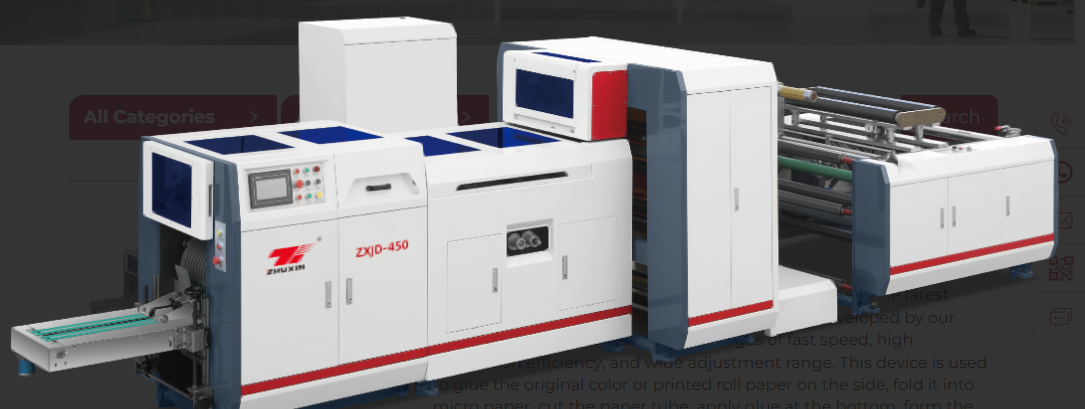
Two bag styles dominate the paper packaging world: the sharp bottom (also called V-bottom or wedge bottom) and the square bottom. Each is produced by a specialized machine, and choosing between them is one of the most consequential decisions a paper bag manufacturer will make. The wrong choice means a line that produces bags nobody wants to buy, or a machine that is too slow for the products you need. This article compares sharp bottom and square bottom paper bag machines in detail — how they differ, what each does best, and which one fits your production line.
1. Sharp Bottom Paper Bag Machines
Sharp bottom paper bag machines produce bags with a pointed, wedge-shaped base. The bottom is formed by folding the paper tube diagonally and gluing the overlapping layers, creating a bag that lies flat when empty and opens into a classic triangular-bottom shape.
The defining characteristic of sharp bottom machines is speed. Because the bottom-forming process is simpler than square bottom construction, sharp bottom lines can run extremely fast. The Zhuxin ZXJD-450, for instance, operates at 50–600 pcs/min depending on bag size and paper weight. This makes sharp bottom machines the preferred choice for high-volume, standardized products.
Key advantages:
- Very high production speed, lowering per-unit cost
- Simple mechanical design with fewer moving parts
- Lower initial investment per bag produced
- Reliable for long production runs
Limitations:
- The wedge bottom is less stable than a square base
- Bags cannot stand upright on their own
- Less suited to heavyweight retail shopping bags
2. Square Bottom Paper Bag Machines
Square bottom machines produce bags with a flat, gusseted base that stands upright when filled. The bottom-forming process involves pre-creasing, folding the gusset panels, and gluing the base in multiple steps — which is more complex and inherently limits maximum speed compared to sharp bottom production.
What square bottom machines sacrifice in top speed, they gain in versatility and product quality. These bags are the industry standard for bakery packaging, fast-food takeaway, coffee to-go, and premium retail shopping bags. The Zhuxin ZXFD-290 produces square bottom bags at up to 200 pcs/min — perfectly adequate for most mid-to-large producers.
Key advantages:
- Bags stand upright, ideal for retail display and easy filling
- Premium appearance that supports brand image
- Wide range of sizes, papers, and handle options
- Better suited to heavier contents
Limitations:
- Lower maximum speed than sharp bottom machines
- More complex mechanisms require better operator training
- Higher machine cost for comparable output volume
3. Side-by-Side Comparison
|
Factor |
Sharp Bottom (e.g., ZXJD-450) |
Square Bottom (e.g., ZXFD-290) |
|
Speed |
50–600 pcs/min |
Up to 200 pcs/min |
|
Bag stability |
Low — lies flat |
High — stands upright |
|
Typical paper |
30–80 gsm |
30–120 gsm |
|
Bag styles |
V-bottom bags, small pouches |
Upright bags, shopping bags |
|
Handle options |
Limited |
Twisted, flat, die-cut handles |
|
Best for |
High-volume commodity bags |
Branded, premium packaging |
|
Price point |
Lower per unit of output |
Higher, but more flexible |
The table makes the trade-off clear: sharp bottom machines win on raw output, while square bottom machines win on bag quality, stability, and market value.
4. How to Choose
Choose a sharp bottom machine if you:
- Produce high volumes of small to medium bags, such as fast-food bags, bread bags, and small paper pouches
- Compete primarily on price in commodity markets
- Want the lowest cost per bag and maximum throughput
- Have stable, long-running product specifications
Choose a square bottom machine if you:
- Serve bakeries, cafés, and retailers who need bags that stand on the shelf
- Produce premium shopping bags with handles
- Need flexibility across many bag sizes and paper grades
- Want to build a brand around high-quality printed packaging
Many successful manufacturers run both types — a sharp bottom line for volume products and a square bottom line for premium orders.
5. Production Economics: Speed vs. Value
Production economics depend on three factors: speed, waste rate, and product price. A sharp bottom machine producing 400 pcs/min at low waste makes commodity bags at the lowest cost. But if those bags sell for pennies, a square bottom line producing 150 premium bags per minute — each selling for two or three times more — can generate higher revenue per minute of machine time.
Calculate your break-even point using your actual bag prices, paper costs, glue consumption, and labor. A common mistake is buying the fastest machine without checking whether the market for its bag style can absorb the output. Demand for square bottom bags is growing faster in most markets because of the premium retail and food-service segments, so factor future demand into your decision.
Conclusion
There is no universal "best" machine — only the best fit for your production line and target market. Sharp bottom paper bag machines deliver unmatched speed and economy for high-volume commodity bags, while square bottom machines produce the stable, premium bags that command higher prices in bakery, food-service, and retail markets. Analyze your customers' bag requirements, price points, and volumes, then match the machine accordingly.
Zhejiang Zhuxin Machinery manufactures both types to the same ISO 9001 certified standard: the ZXJD-450 sharp bottom machine (50–600 pcs/min) and the ZXFD-290 square bottom machine (200 pcs/min). Our engineers can help you compare configurations side by side, project your cost per bag, and design a line — or a combination of lines — that fits your market. With lifetime after-sales support and full technical assistance, Zhuxin is ready to help you make the right call. Contact us today to discuss your production goals.