
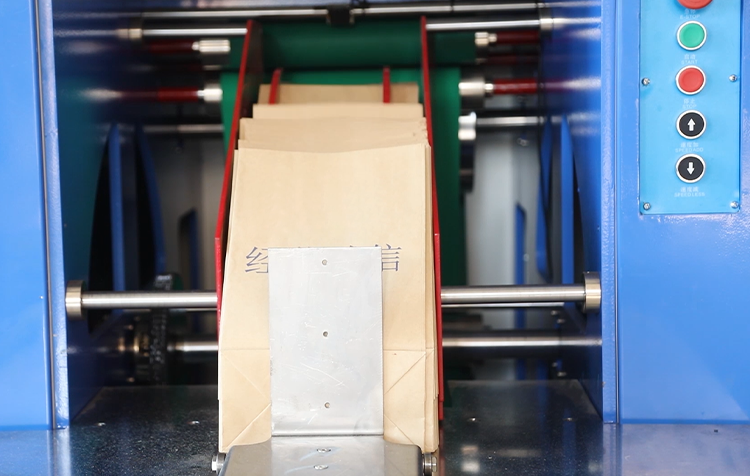
Precision Control Systems: The Core of Efficient and High-Quality Paper Bag Production
Modern paper bag machines achieve peak performance through integrated control systems that synchronize critical processes—tension management, cutting, sealing, and drying. These technologies eliminate production inconsistencies while minimizing waste, a key concern for cost-conscious manufacturers.
Synchronized Tension, Cutting, and Sealing for Zero-Waste Operation
Advanced servo-driven subsystems maintain material integrity across high-speed fabrication:
- Tension sensors dynamically adjust roller pressure to prevent paper tearing during feeding
- Laser-guided cutting blades deliver micron-level accuracy across 20+ bag dimensions
- Thermally regulated sealing jaws apply adhesive within ±0.1mm tolerance zones
- Real-time tracking reduces material overruns by 18% compared to mechanical systems (Packaging Efficiency Quarterly, 2024)
This closed-loop coordination ensures seamless transitions between production phases, enabling up to 30% waste reduction through precision execution.
Real-Time Drying Feedback Loops to Prevent Delamination and Wrinkling
Moisture control systems actively mitigate quality defects during curing:
- Infrared sensors continuously monitor surface humidity gradients
- Adaptive algorithms adjust airflow patterns within 50ms of detection
- Predictive models correlate drying parameters with final bag strength
- Multi-zone temperature regulation prevents fiber stress imbalances
Manufacturers using these automated feedback systems report 90% fewer delamination incidents and eliminate moisture-related warping without operator intervention—ensuring uniform durability.
Automation Architecture: Optimizing Speed, Customization, and Consistency in Paper Bag Machines
Fully Automatic vs. Semi-Automatic Paper Bag Machines: Throughput, Defect Rates, and ROI Analysis
Automatic paper bag machines can crank out over 2000 bags per hour, which cuts down on mistakes made by humans and slashes defects by somewhere between 40 to maybe even 60 percent when compared to their semi-automatic counterparts. Sure, these fully automated systems cost quite a bit more initially, but most businesses find that the return on investment comes around within about a year and a half thanks to all those saved labor costs and less wasted materials. For smaller runs or specialized products, semi-automatic models still work just fine. But anyone running a high volume operation will quickly run into problems keeping up with demand consistently because these older machines just cant scale properly without creating quality issues down the line.
Modular Design for Rapid Changeovers Across Bag Types (SOS, Pinch, Valve, etc.)
Modular engineering enables swift reconfiguration between bag formats—such as SOS to pinch-bottom—in under 15 minutes. Standardized components like adjustable forming shoulders and glue applicators eliminate retooling delays. This flexibility supports small-batch customization without sacrificing output, making it essential for manufacturers serving diverse markets—from retail to industrial packaging.
Integrated Quality Assurance: From In-Line Inspection to End-Use Durability Validation
AI Vision Systems Monitoring Glue Coverage, Fold Alignment, and Handle Integrity in Real Time
Today's paper bag production lines are getting smart with AI vision systems that spot defects while cranking out over 120 bags every minute. These machines use high res cameras paired with machine learning software to catch issues like poor glue application down to less than half a millimeter, check if folds line up within about half a millimeter either way, and even test how well handles hold up under weights around 8 kilograms. The system constantly checks itself during operation so it can adjust automatically whenever something goes off track. This cuts down on wasted materials by roughly 20-25%, which makes a big difference in the bottom line. When problems like gaps in adhesive or crooked seams get caught early before the glue sets, companies avoid bigger headaches later on. Nobody wants their products arriving damaged because the packaging fell apart during shipping, and these systems help make sure that doesn't happen.
Sustainable Performance: Energy Efficiency and Technical Feasibility in Next-Gen Paper Bag Machines
The latest paper bag machines come equipped with energy saving tech that cuts down on their environmental footprint while still getting the job done fast enough for most operations. These newer models feature servo driven motors plus power saving modes during downtime, which can slash electricity usage around 40% compared to older machines. That means significantly fewer carbon emissions overall. What's more, precision tension controls and automatic alignment systems help prevent wasted paper and those annoying printing errors that nobody wants. Many top brands today are built to handle recycled materials as well as FSC certified stuff right out of the box, making it easier for companies to support circular economy initiatives. Plus, they work great with water based inks and safe food grade adhesives, so manufacturers stay ahead of regulations like the EU Directive 2025/2040 banning certain plastics. All this green tech doesn't hurt productivity either since throughput rates remain solid and product quality stays high without breaking the bank.
FAQ
What are the key benefits of using fully automatic paper bag machines?
Fully automatic machines enhance throughput, reduce defect rates by 40-60% compared to semi-automatic models, and offer a quicker ROI despite higher initial costs.
How do modular designs help during production?
Modular designs facilitate rapid changeovers between bag types, minimizing downtime and maximizing production efficiency.
What sustainability features are integrated into modern paper bag machines?
New machines feature energy-saving technologies, support for recycled and FSC-certified materials, and compatibility with eco-friendly inks and adhesives, reducing their environmental impact.
Table of Contents
- Precision Control Systems: The Core of Efficient and High-Quality Paper Bag Production
- Automation Architecture: Optimizing Speed, Customization, and Consistency in Paper Bag Machines
- Integrated Quality Assurance: From In-Line Inspection to End-Use Durability Validation
- Sustainable Performance: Energy Efficiency and Technical Feasibility in Next-Gen Paper Bag Machines
- FAQ